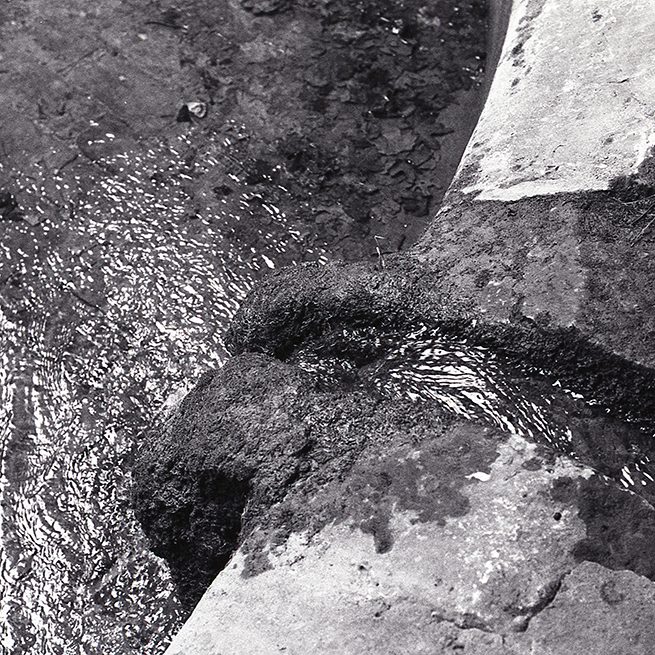
For several years, I have been researching lavoirs: nineteenth-century washhouses in the French countryside. The research began as a photographic exploration of characteristic architectural elements, such as water basins, sloping stone edges, water channels, and compluvium roofs.
Once lively workplaces with a distinct social function, lavoirs were particularly important spaces for women. Men were not welcome, allowing women to work among themselves, communicate freely, and attain a certain degree of emancipation. The washhouses became a lens through which to examine the relationship between architecture and social structures, and to reflect on how history becomes materialized in space and landscape.
Now that the washhouses have lost their original function, they seem to have become monuments to water: empty, partly abandoned structures with a water basin as their central point. They vary greatly in scale, materials, and character. Some are located in the middle of villages, while others are hidden in the landscape, along rivers or springs, partly overgrown with moss and vegetation.
Although the washhouses have become a focal point, the research is primarily concerned with the relationships that emerge between the different elements they bring together: architecture and water, interior and exterior, traces of labour, social history, traces of time, and landscape
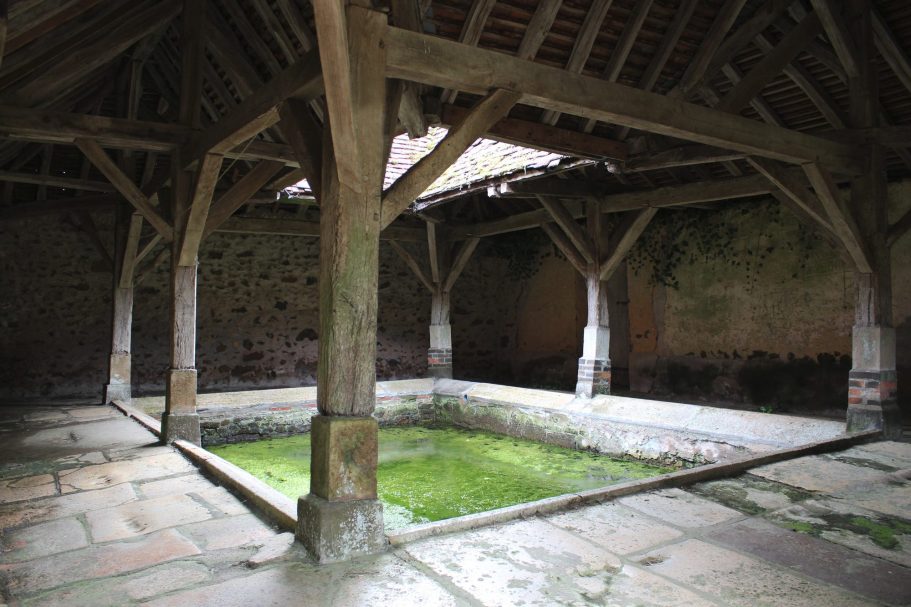
Lavoir du Petit Saint Jean, Saint Sauveur en Puisaye
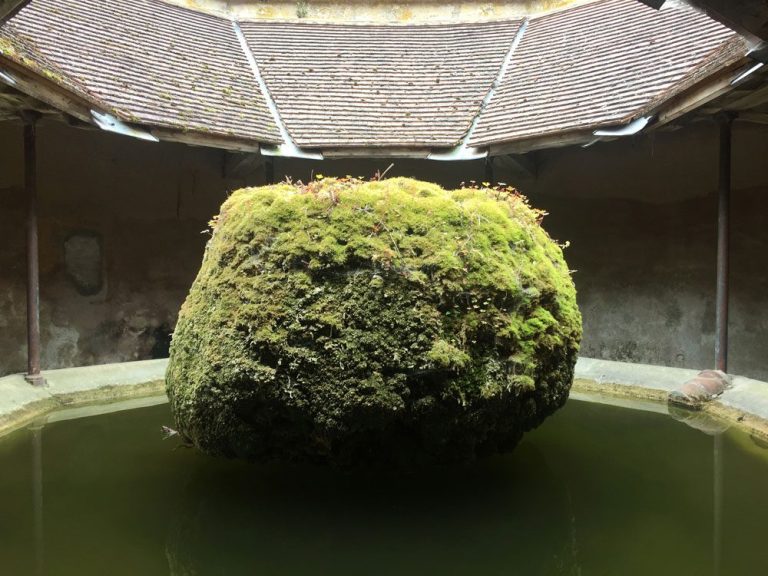
Lavoir de la Roche, Dissangis
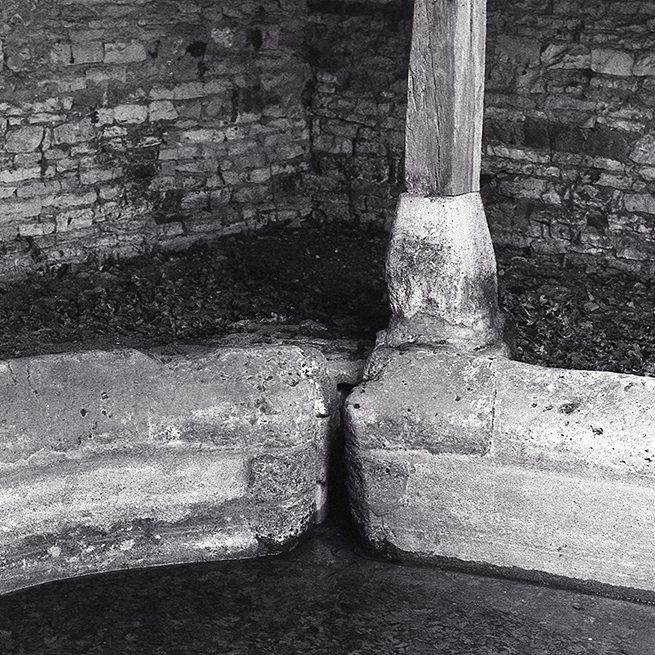
Lavoir de la Marlée, Perreuse