AFTERIMAGE
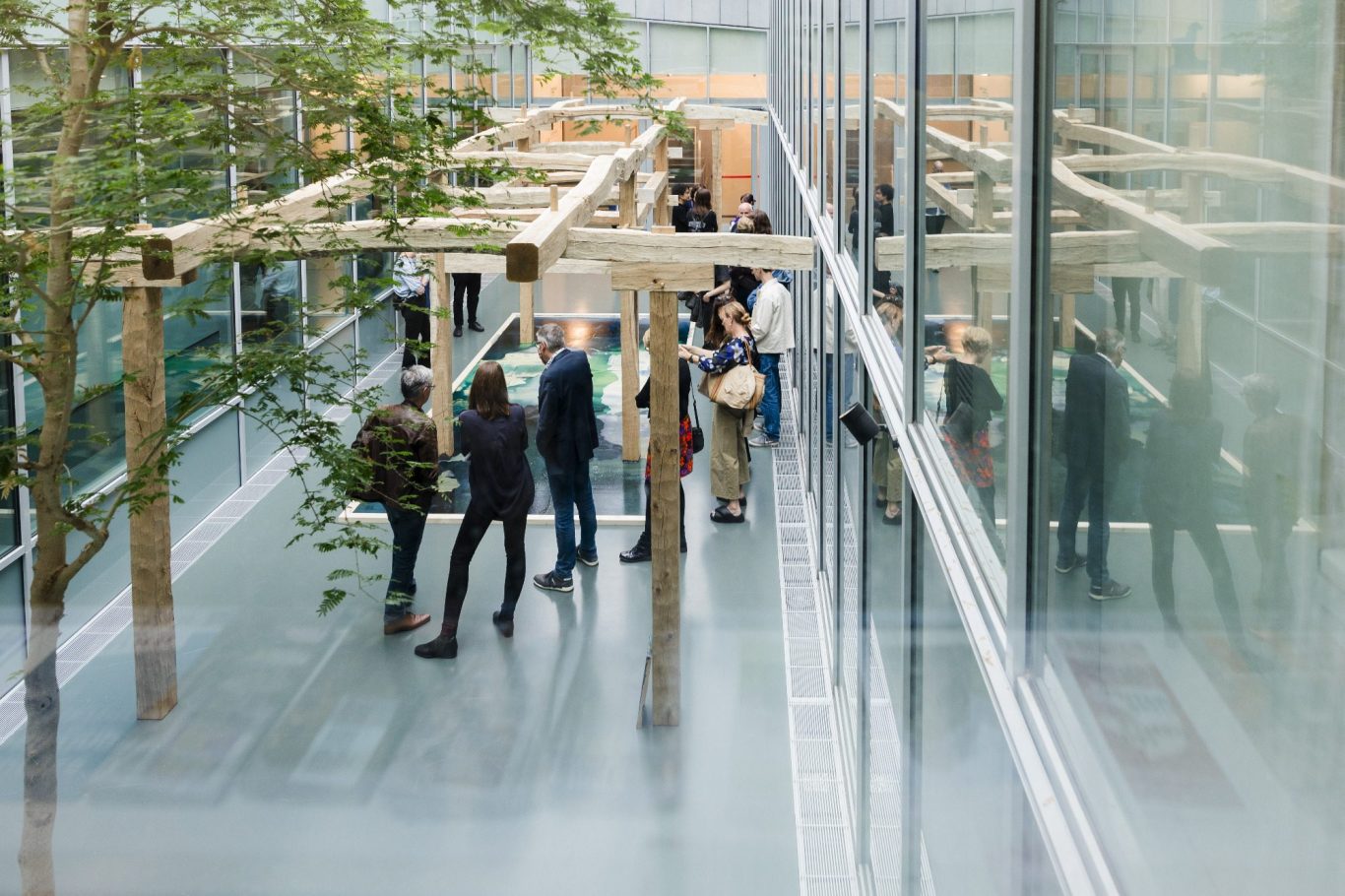
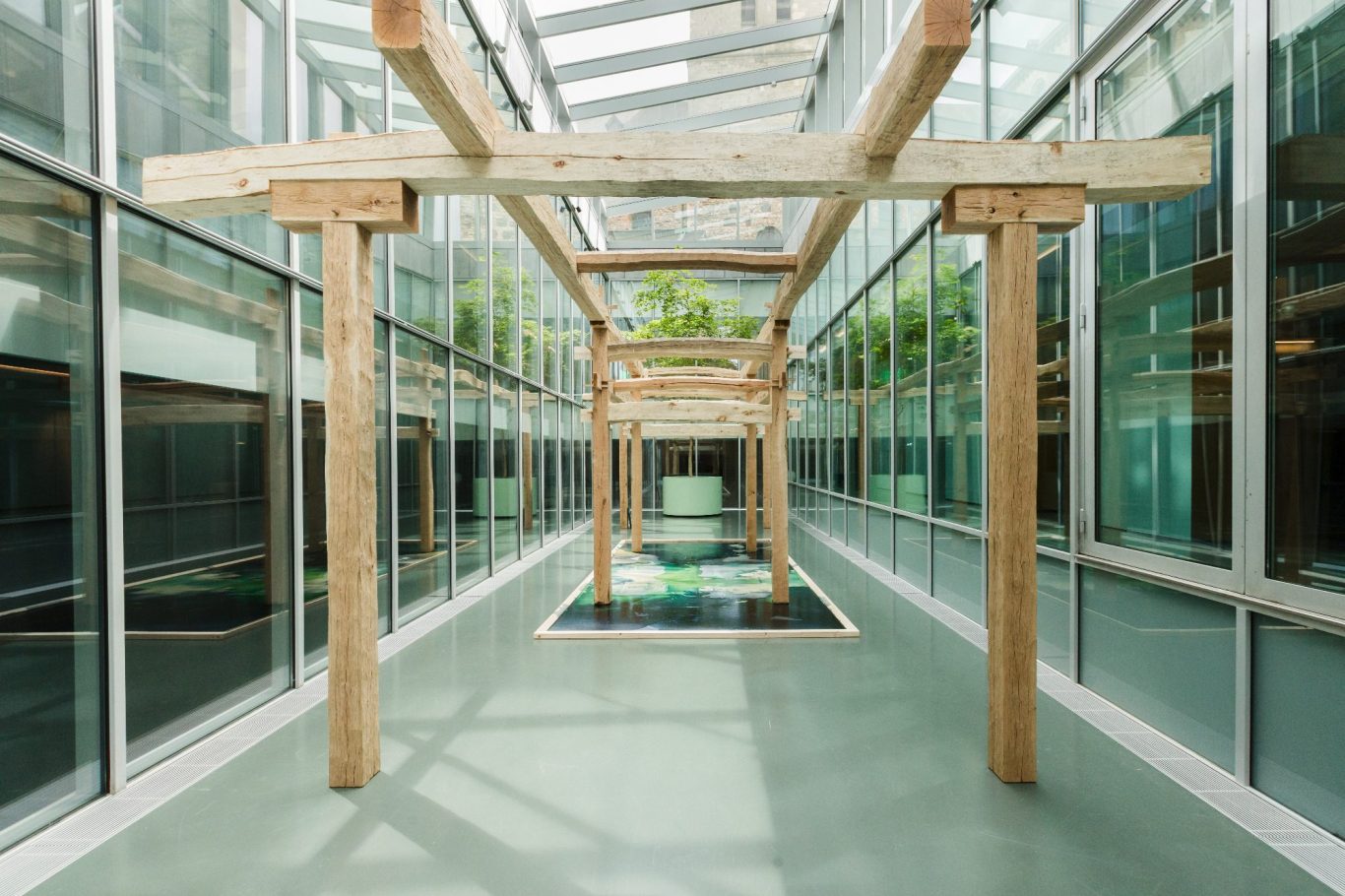
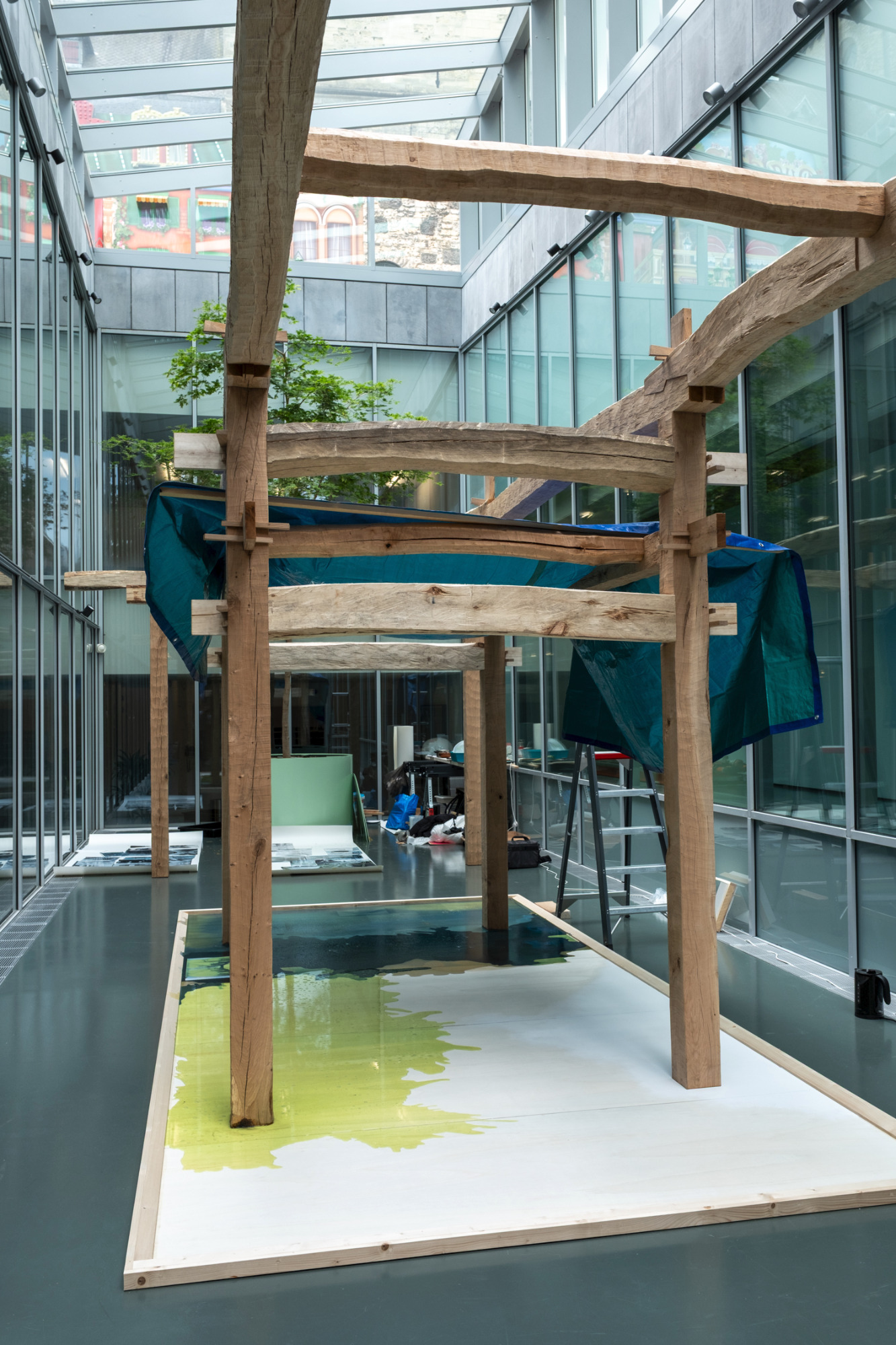
Charlotte Koenen presents a large-scale installation in the Atrium, developed from her research into nineteenth-century lavoirs: historic washhouses in the French countryside. Once vibrant, collective workspaces, these sites now remain mainly as traces of use in eroded floors and basins.
In this installation, Charlotte Koenen explores the interplay between the architecture of the washhouse and the surface of the water.
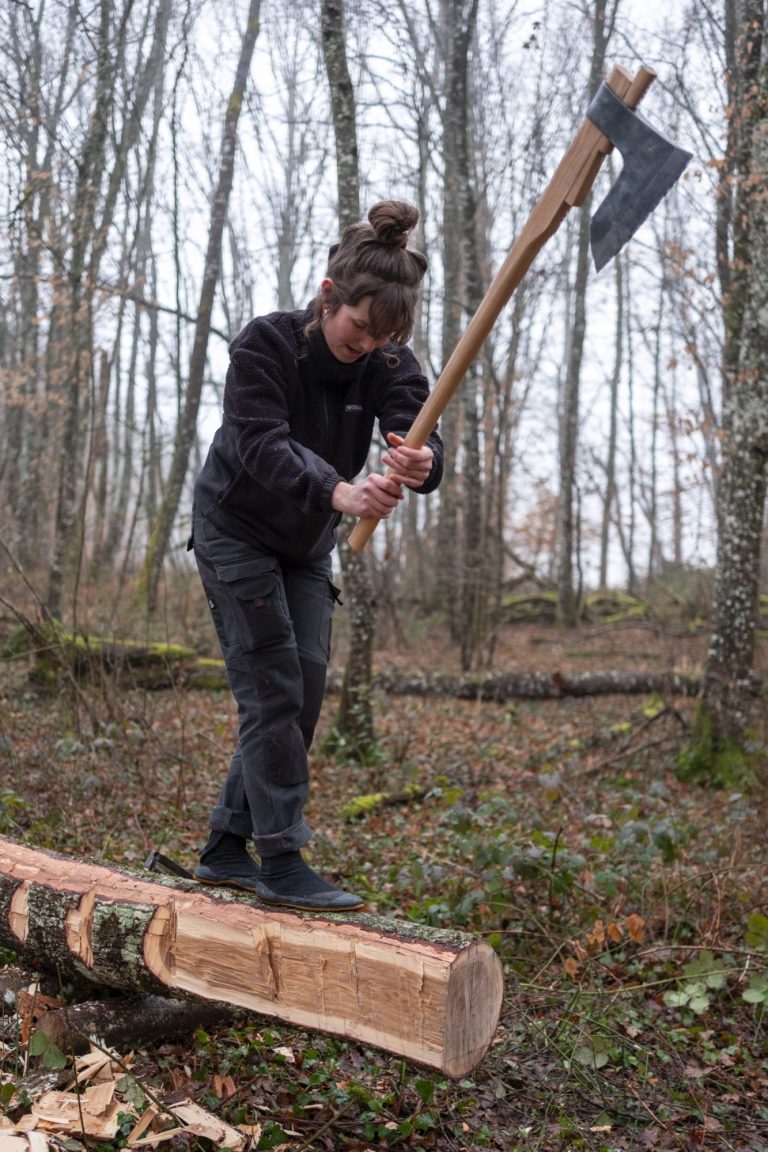
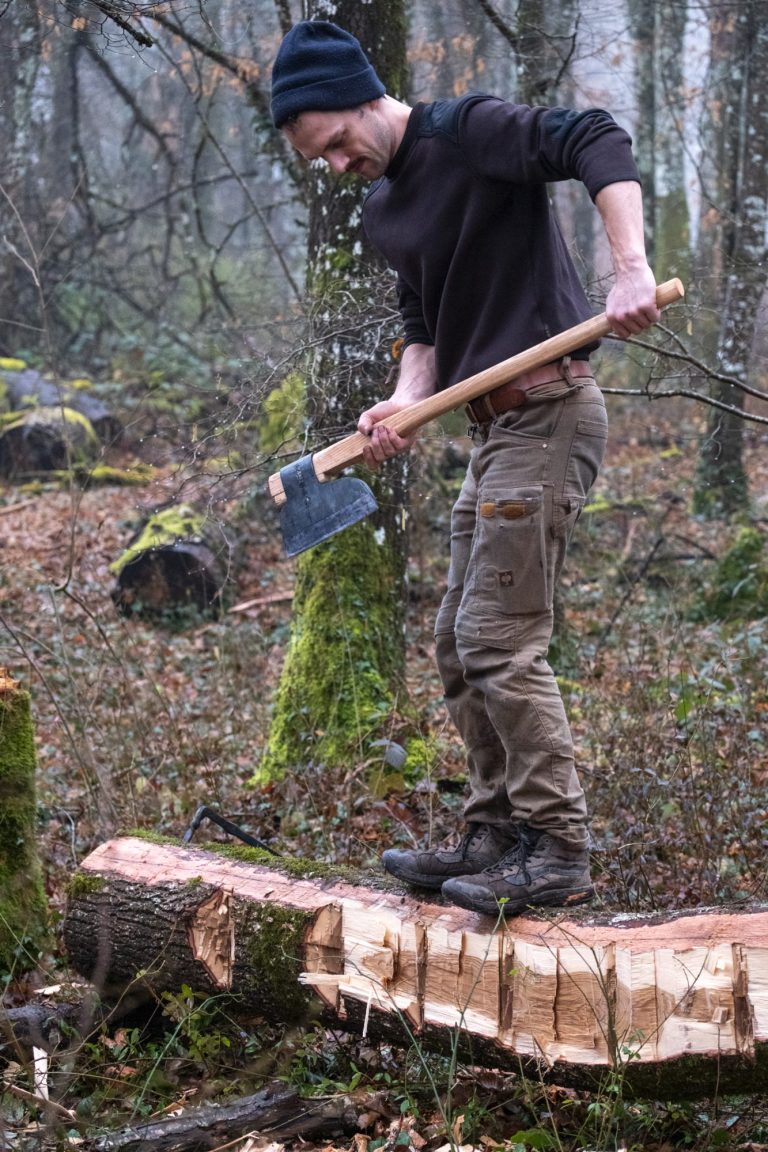
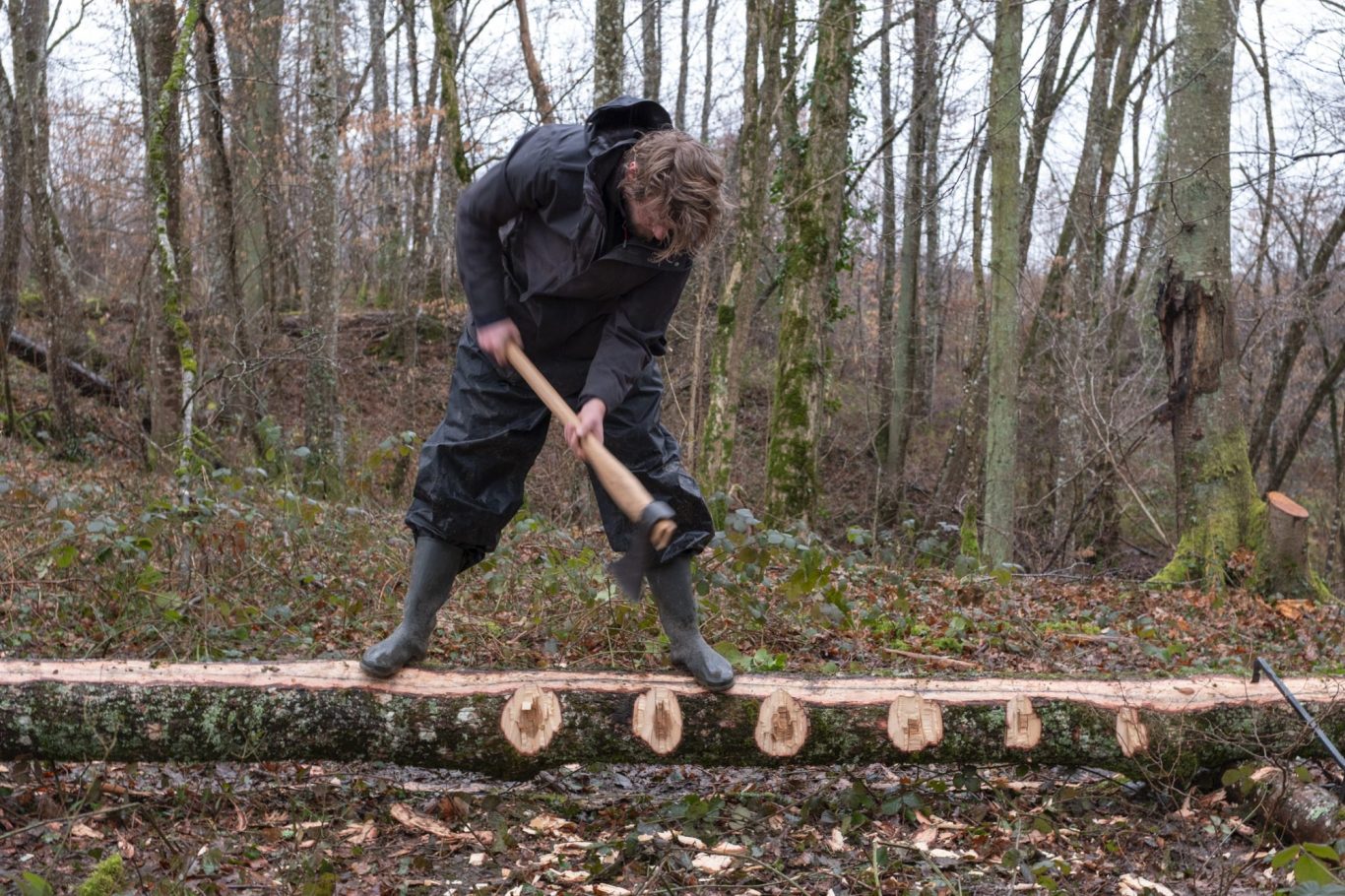
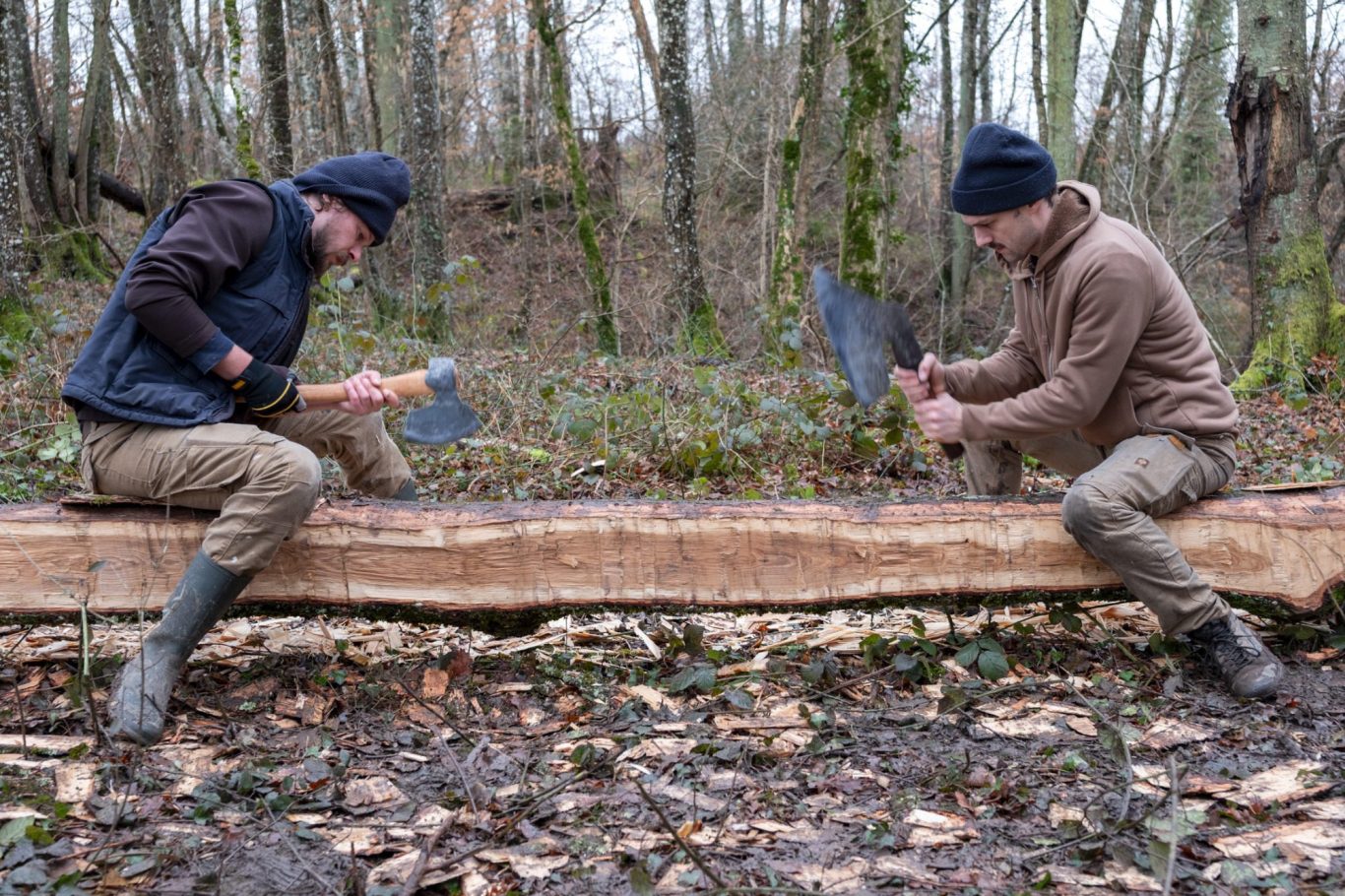
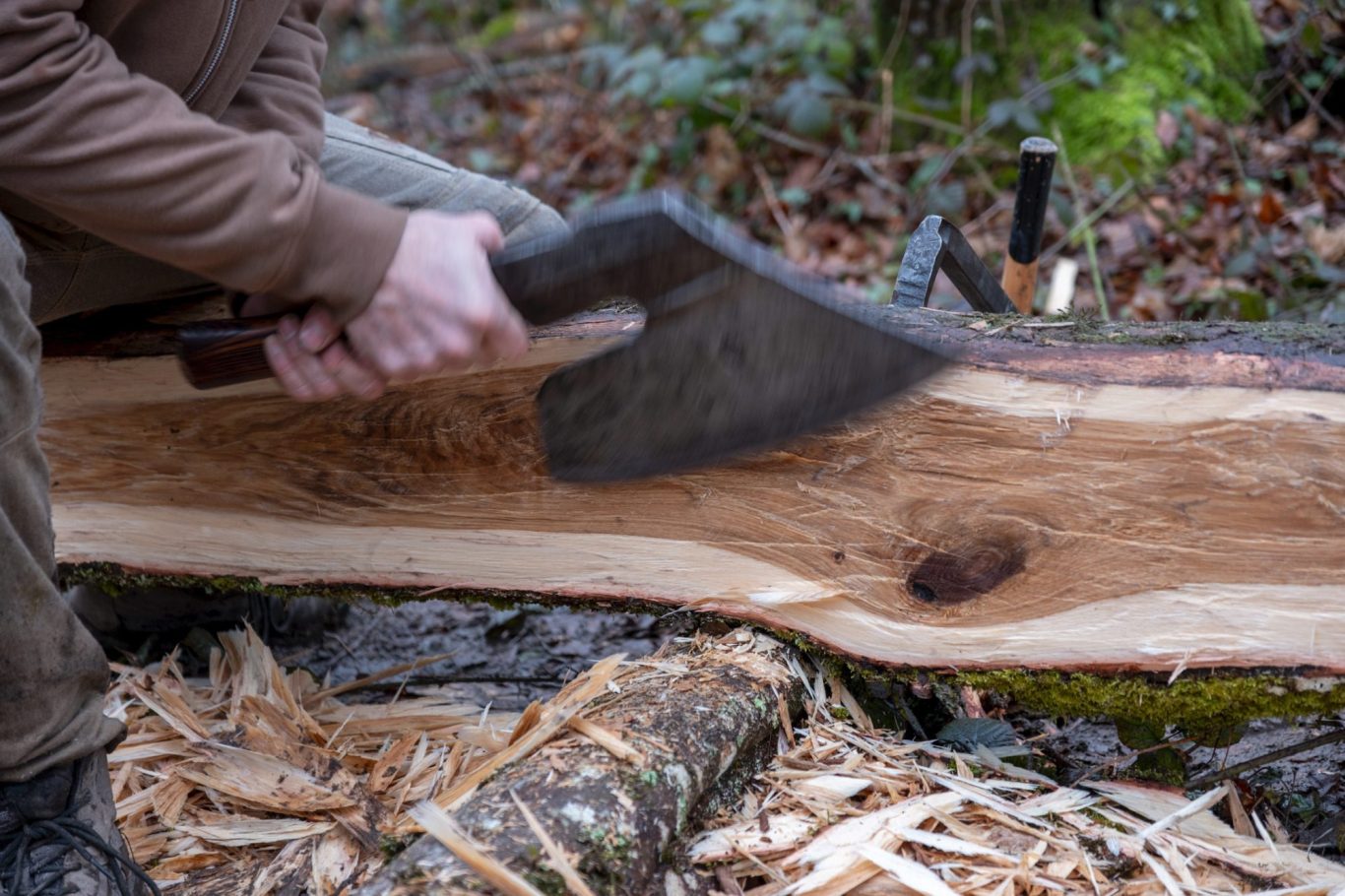
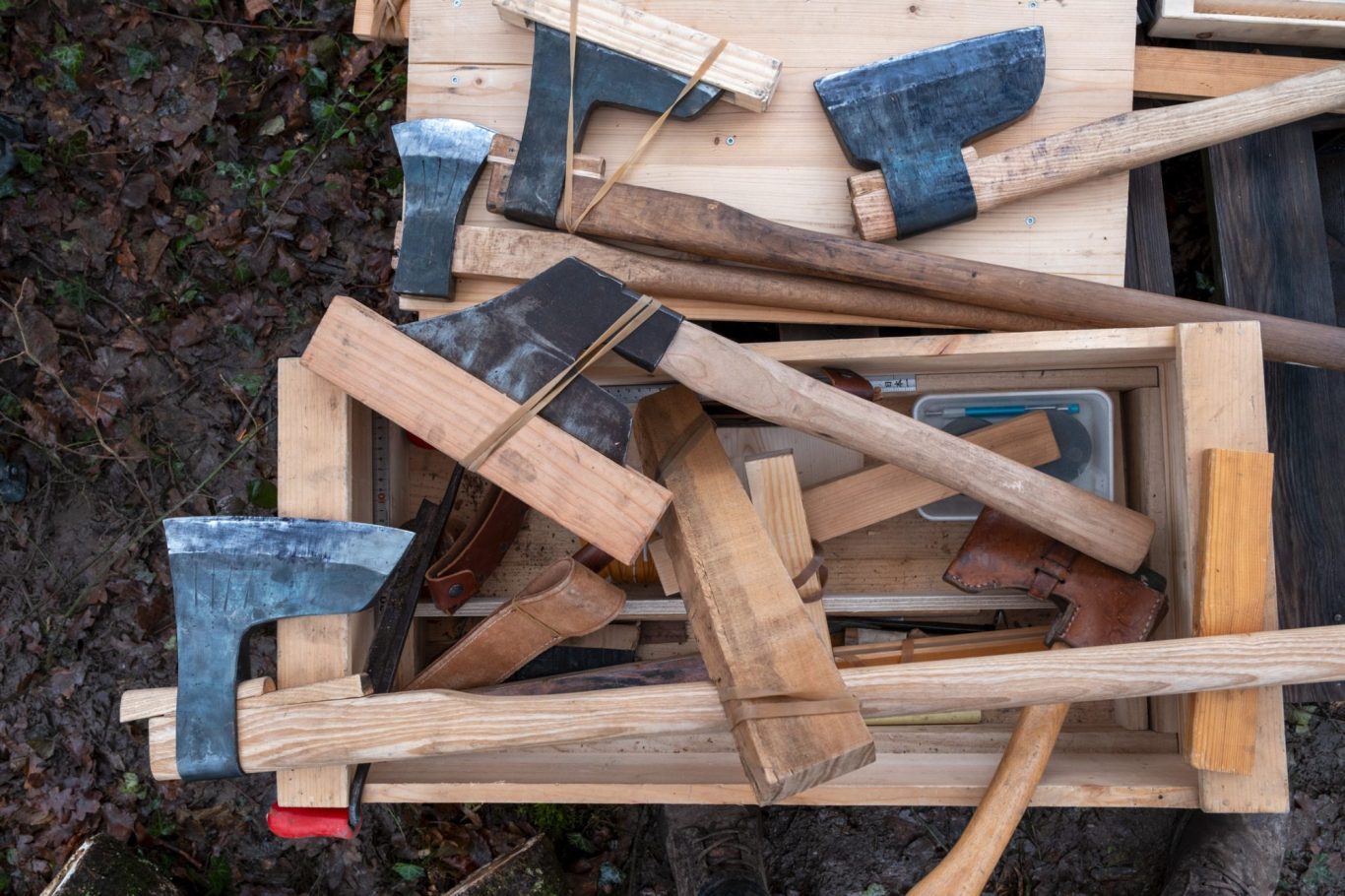
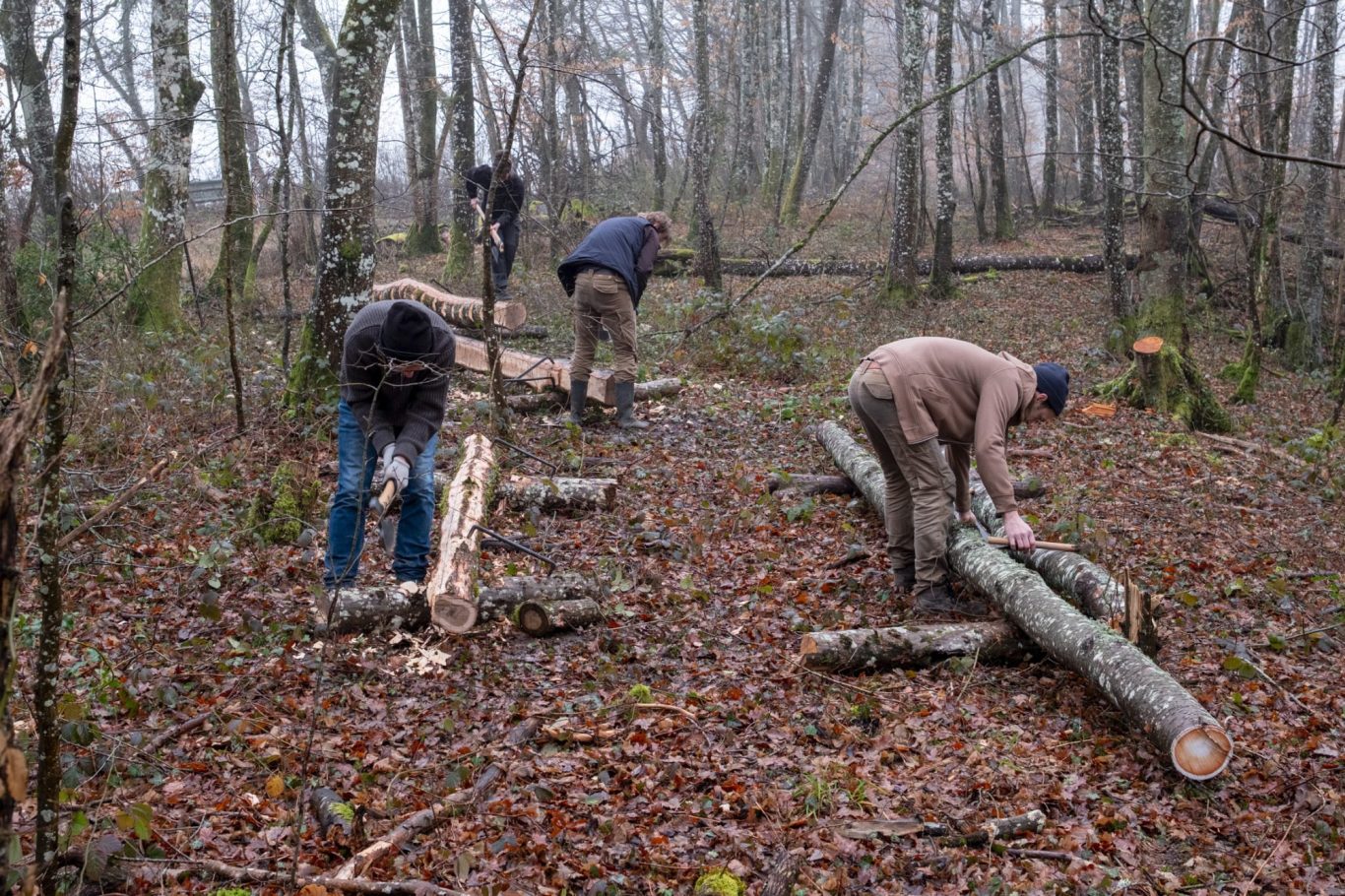
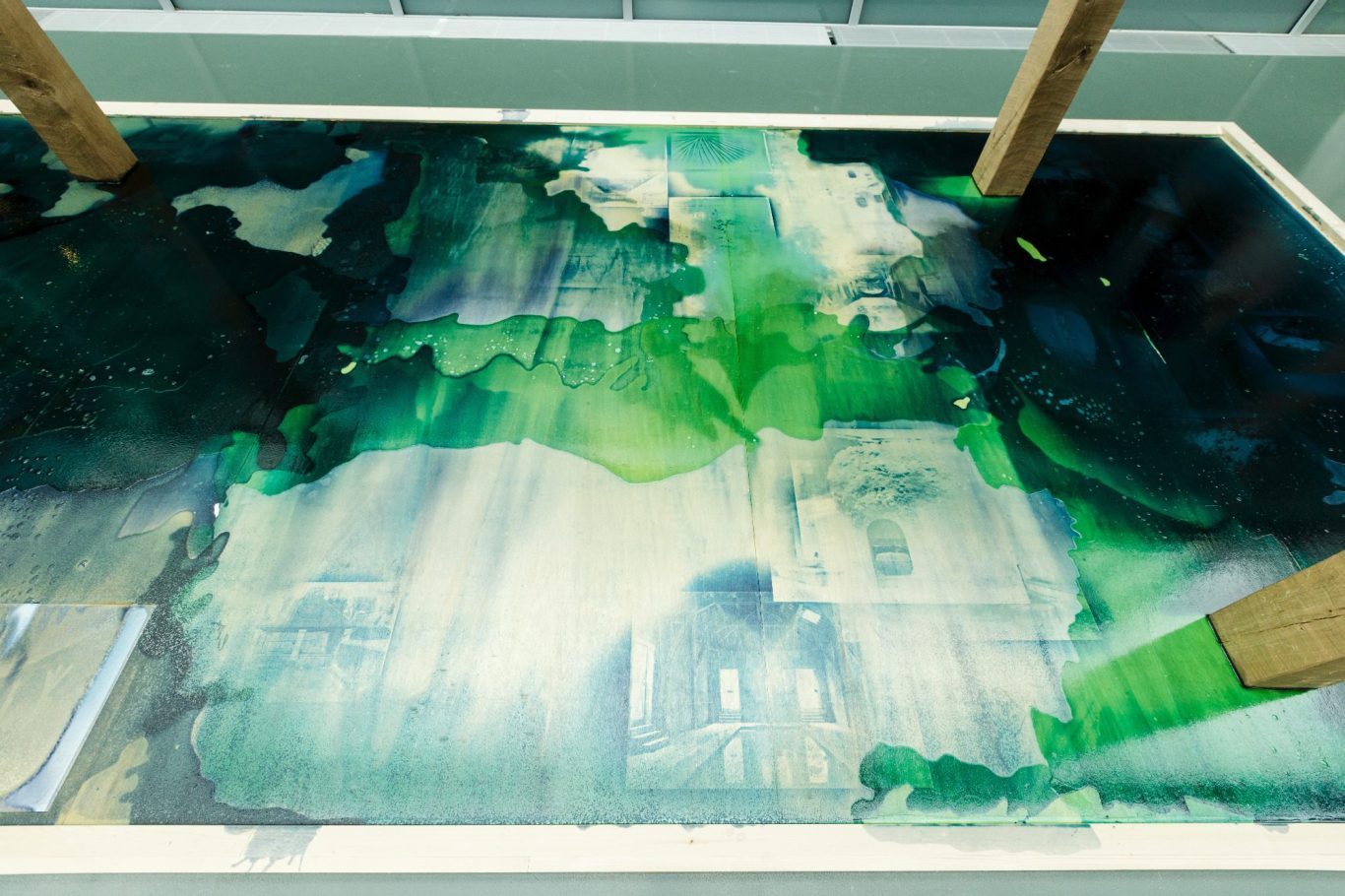
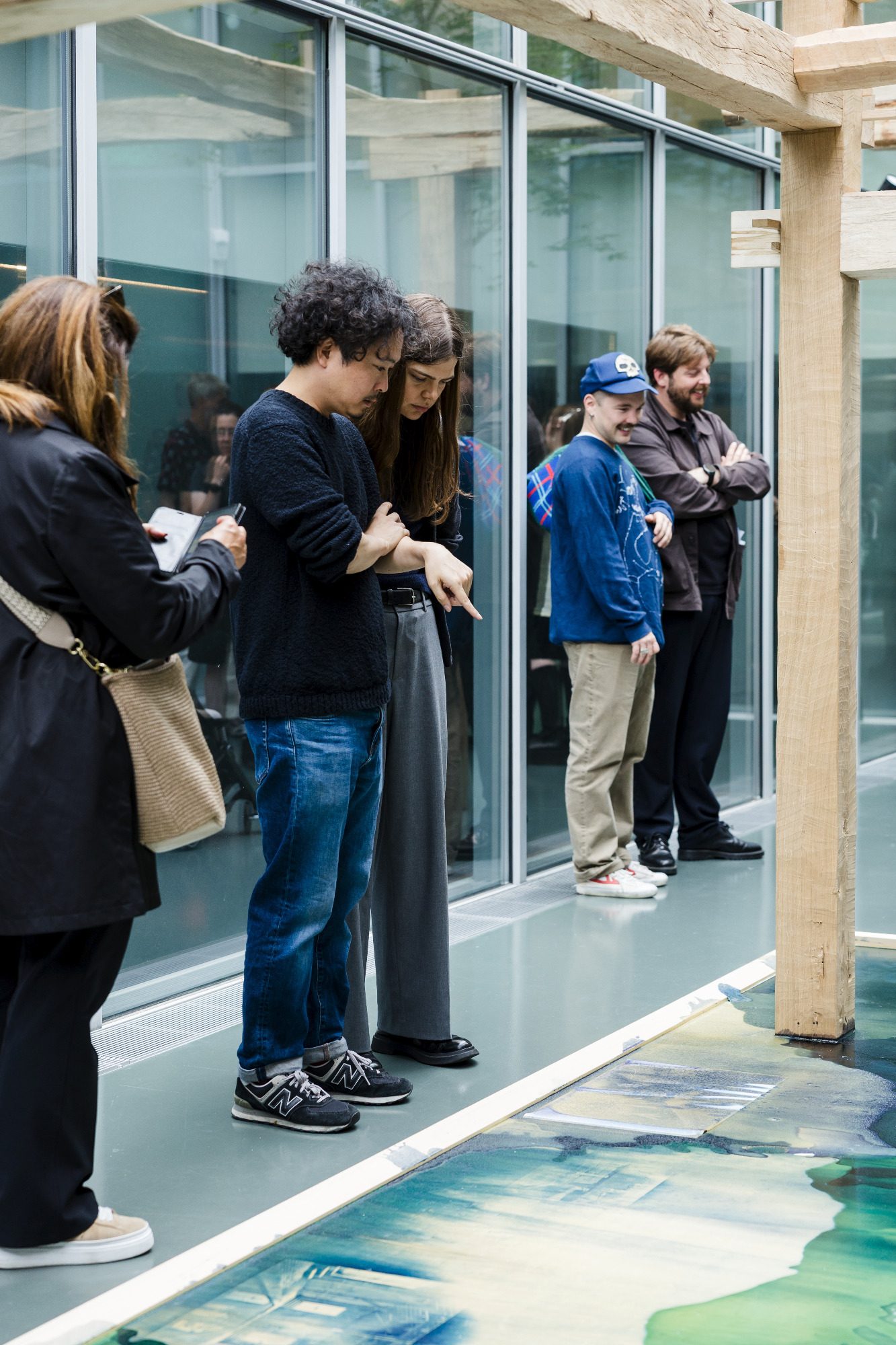
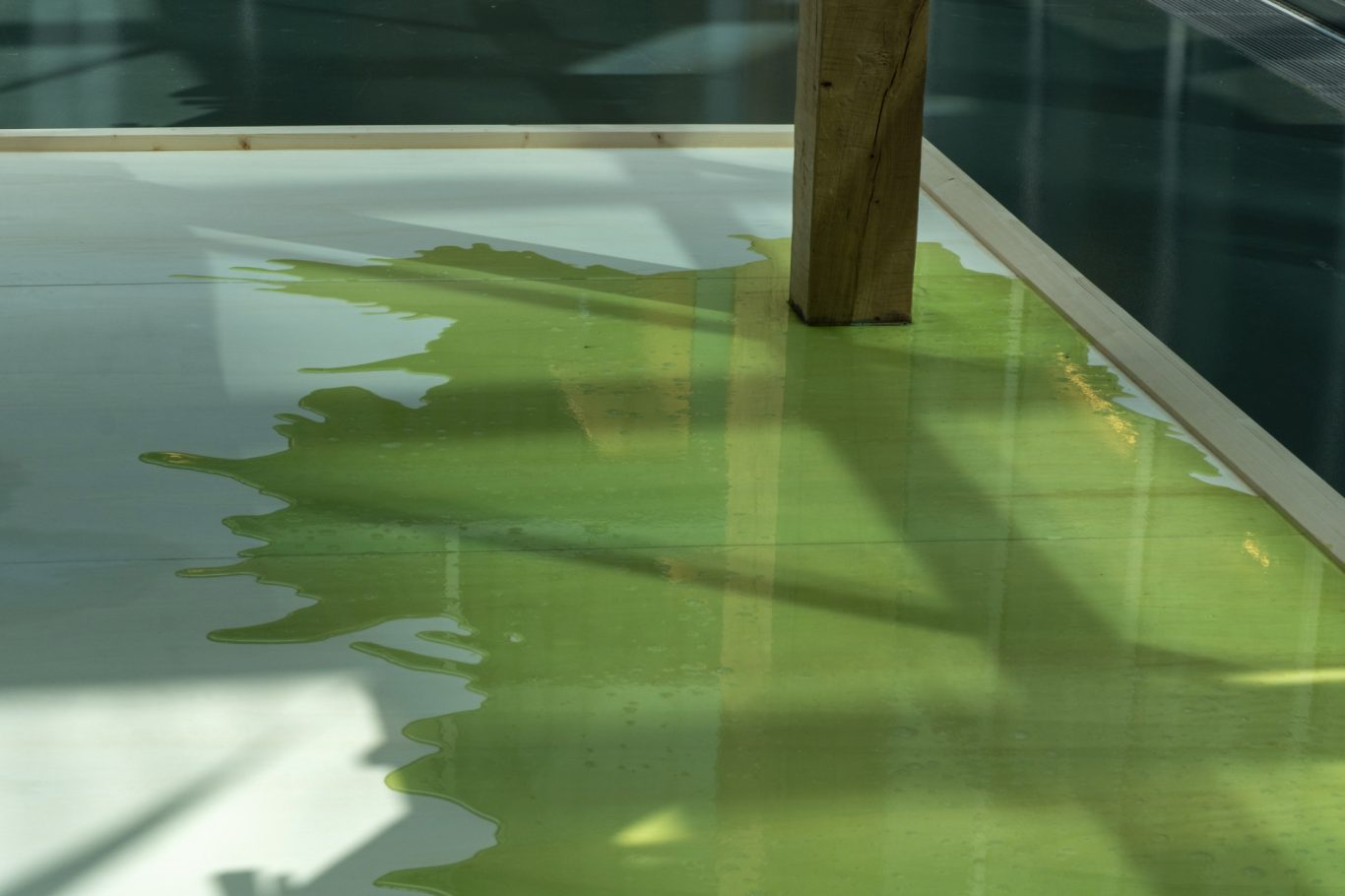
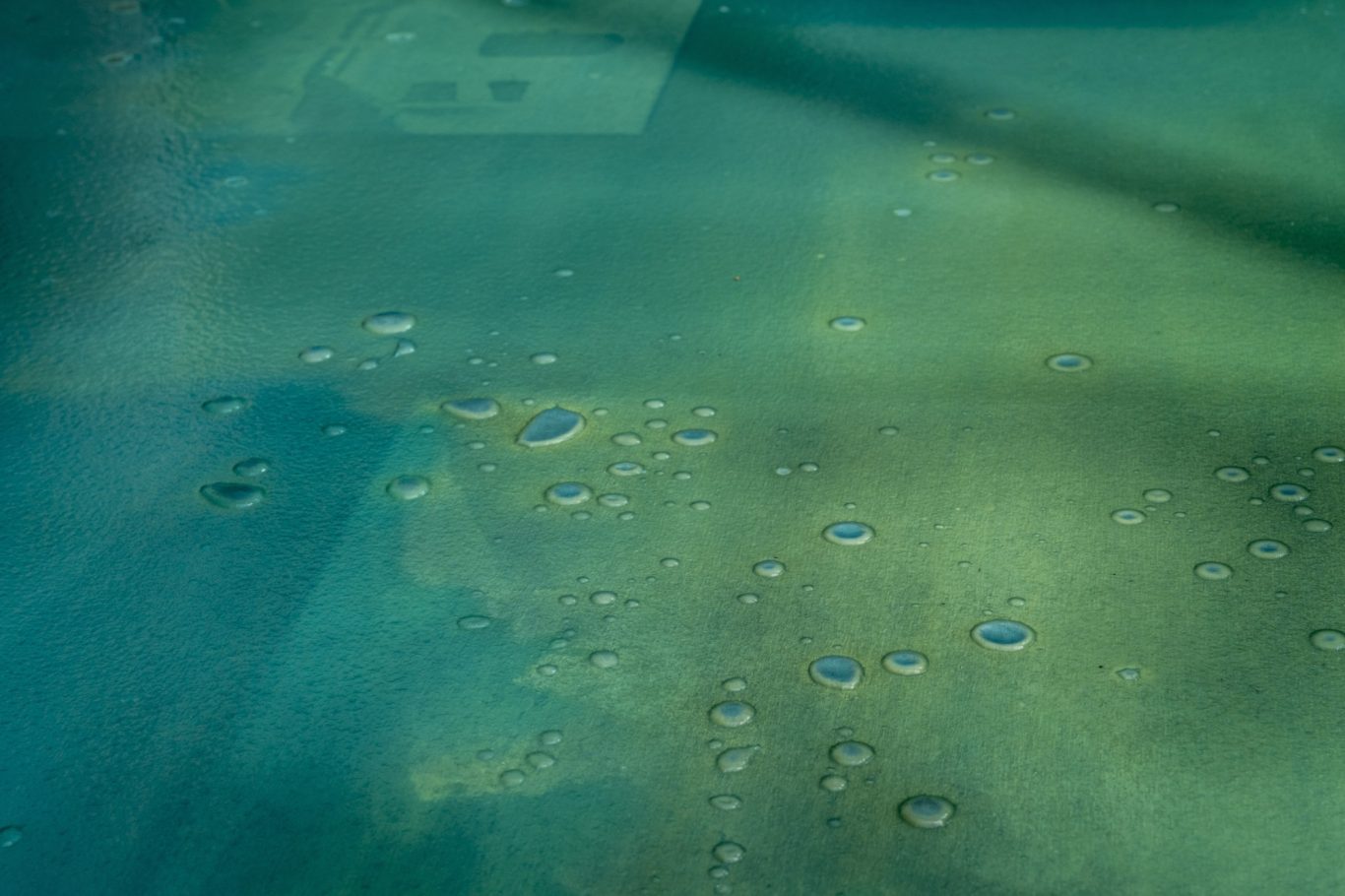
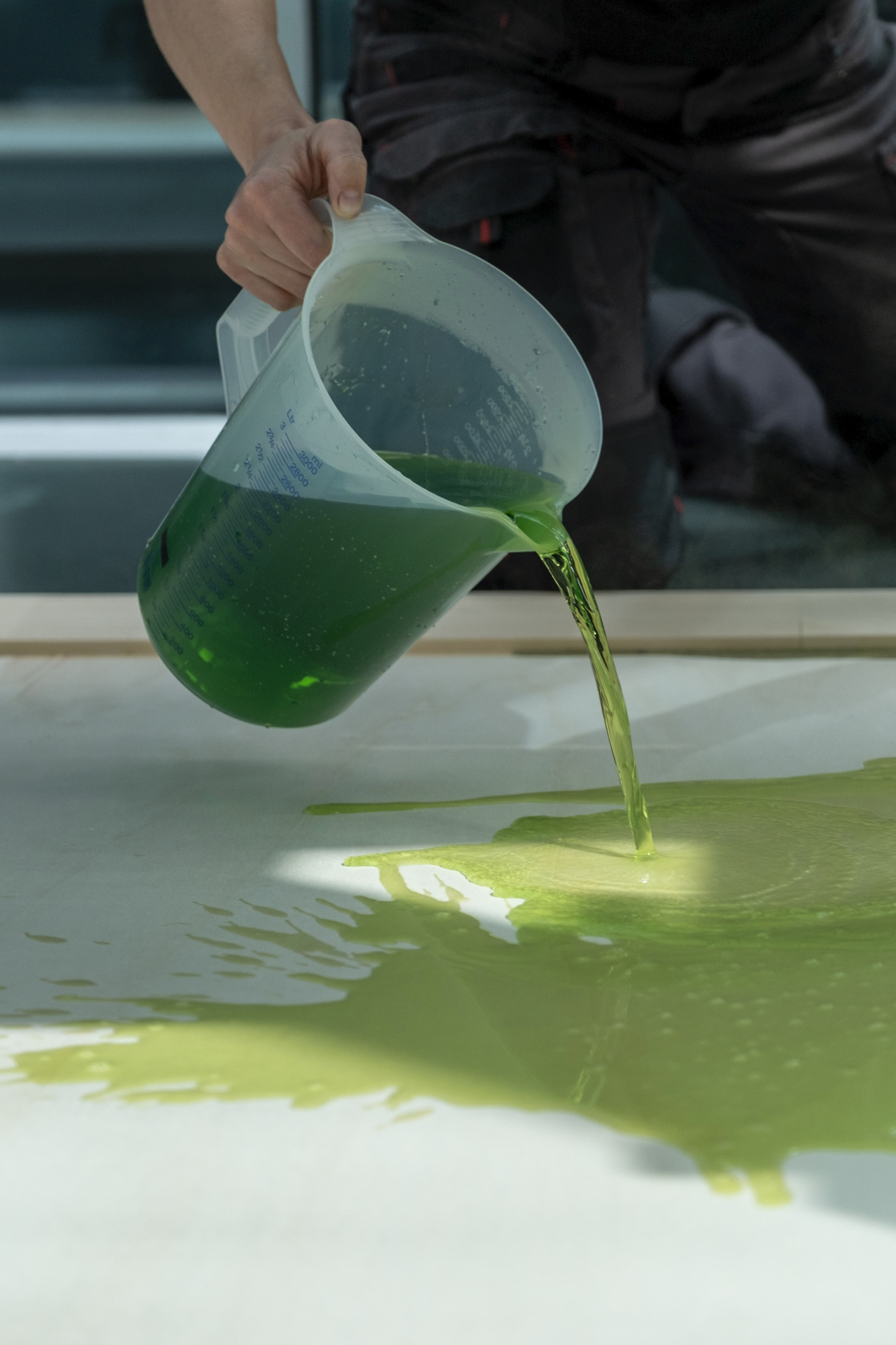
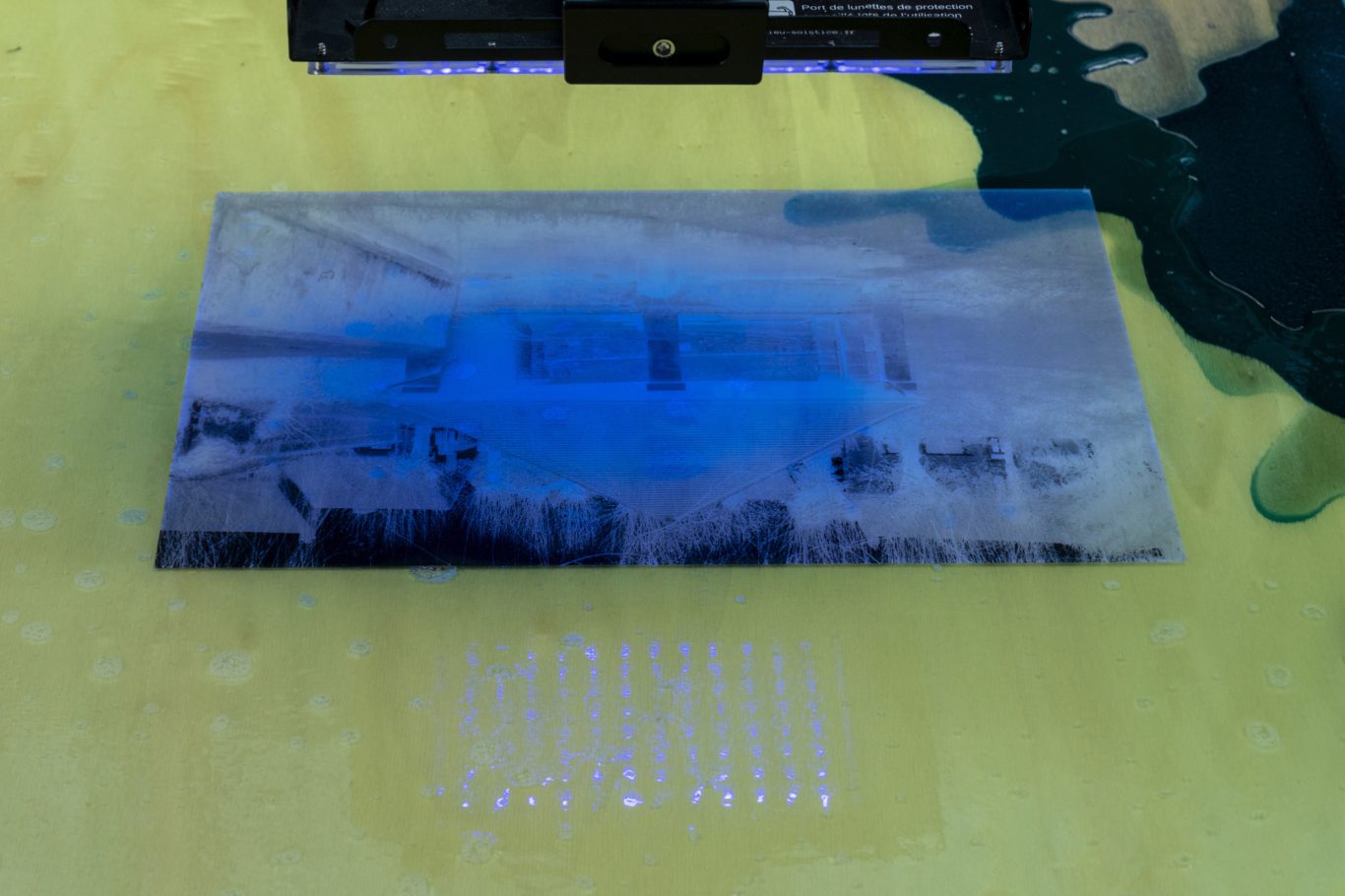
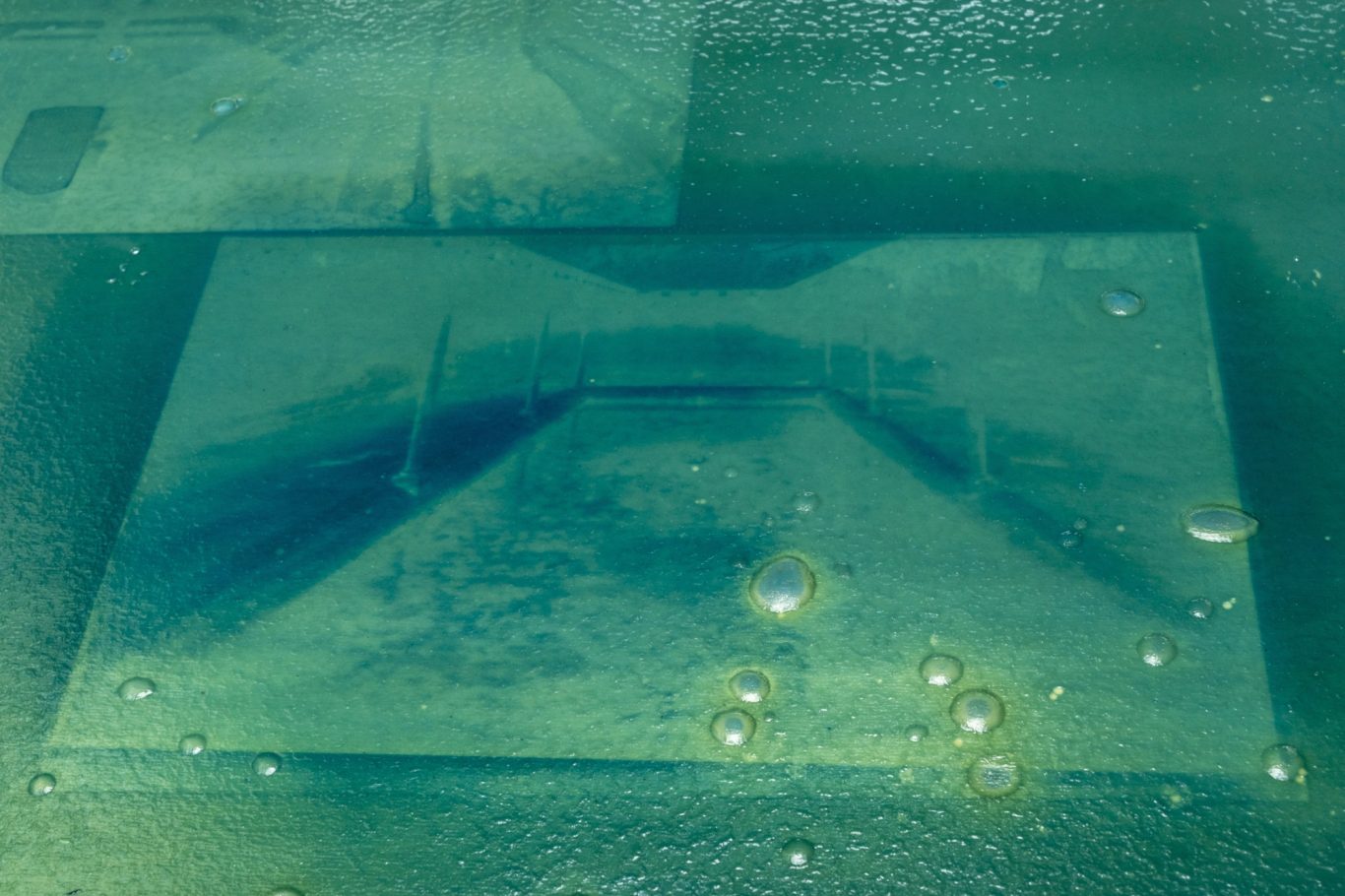
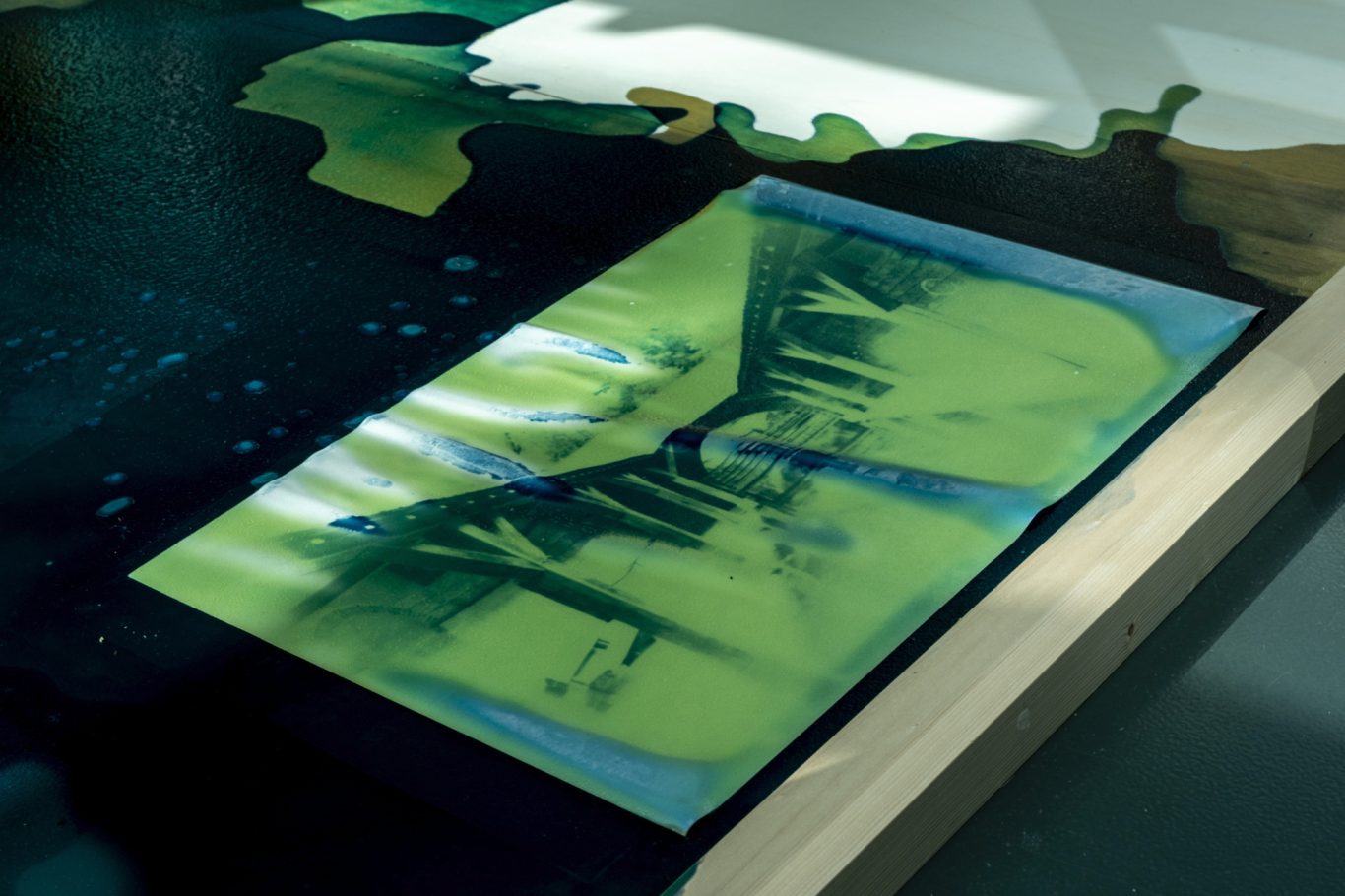
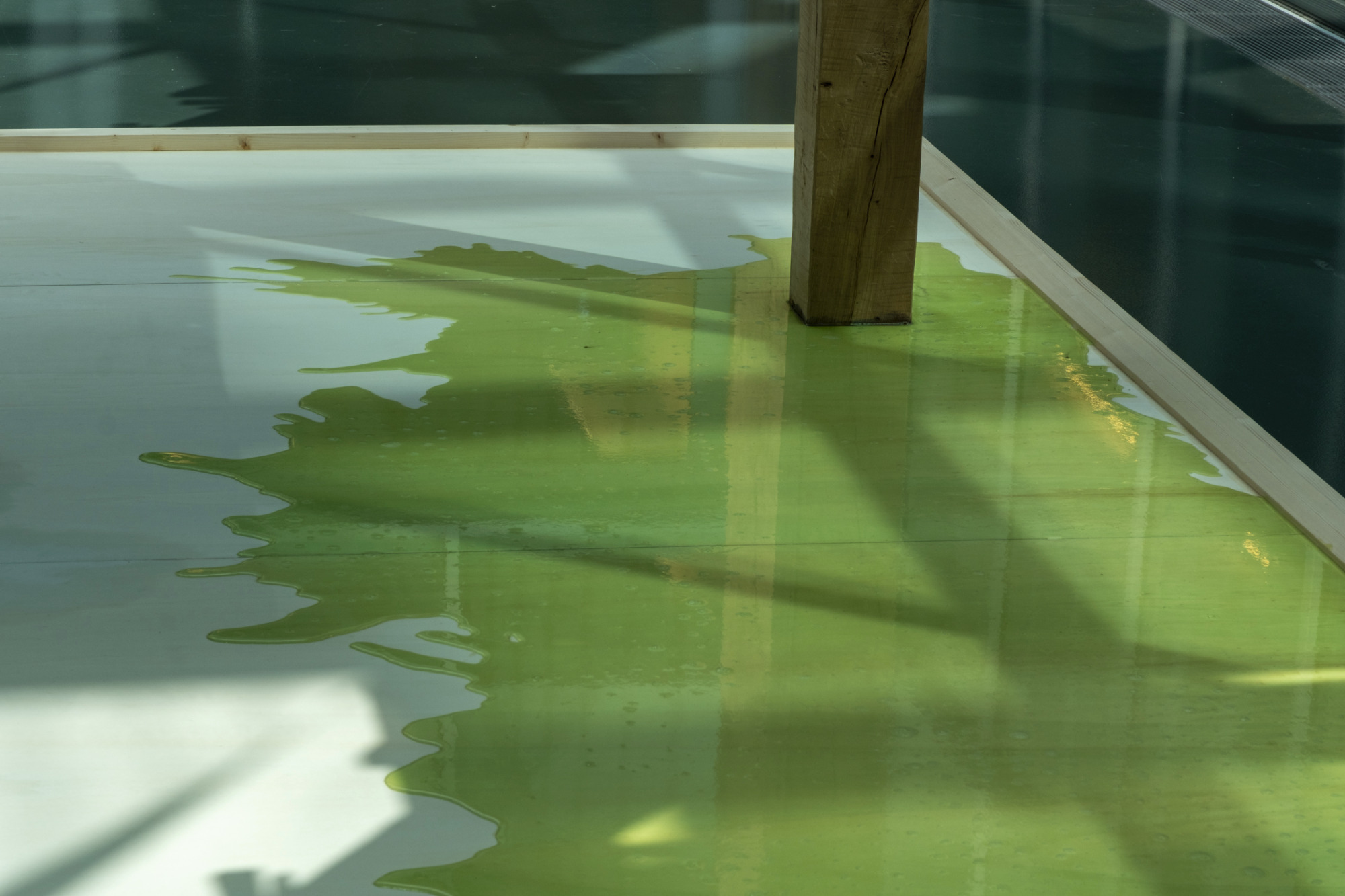
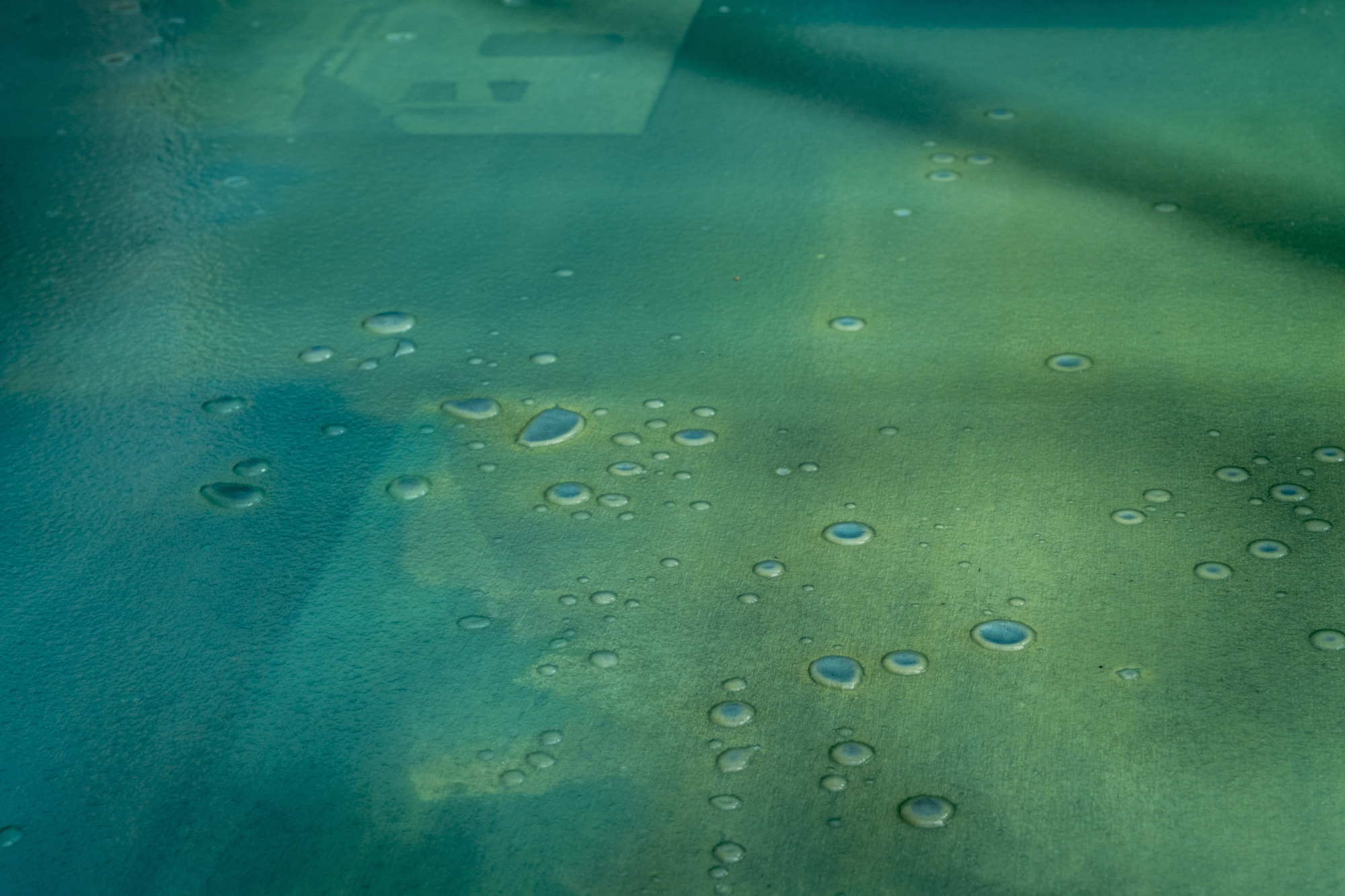
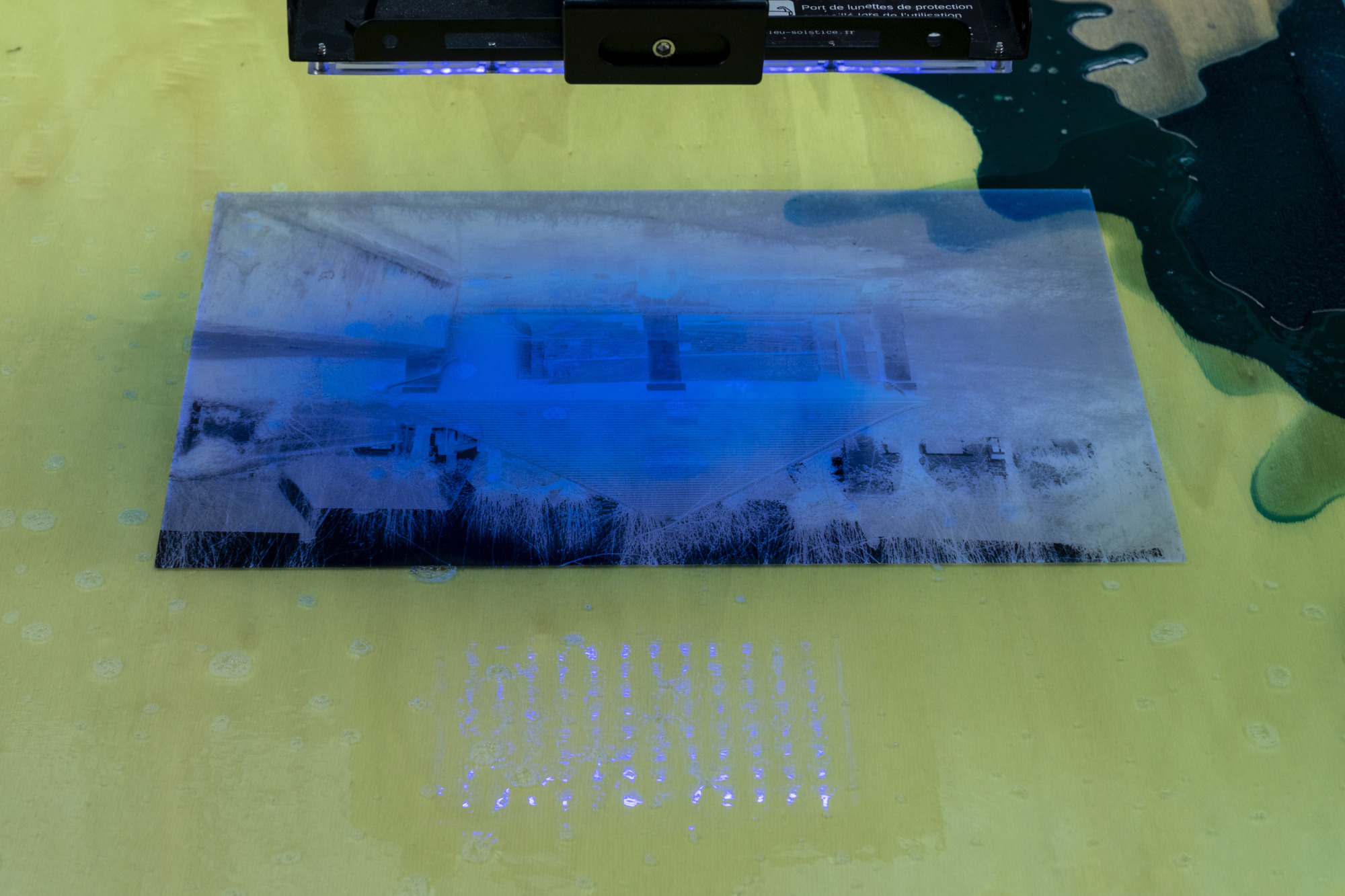
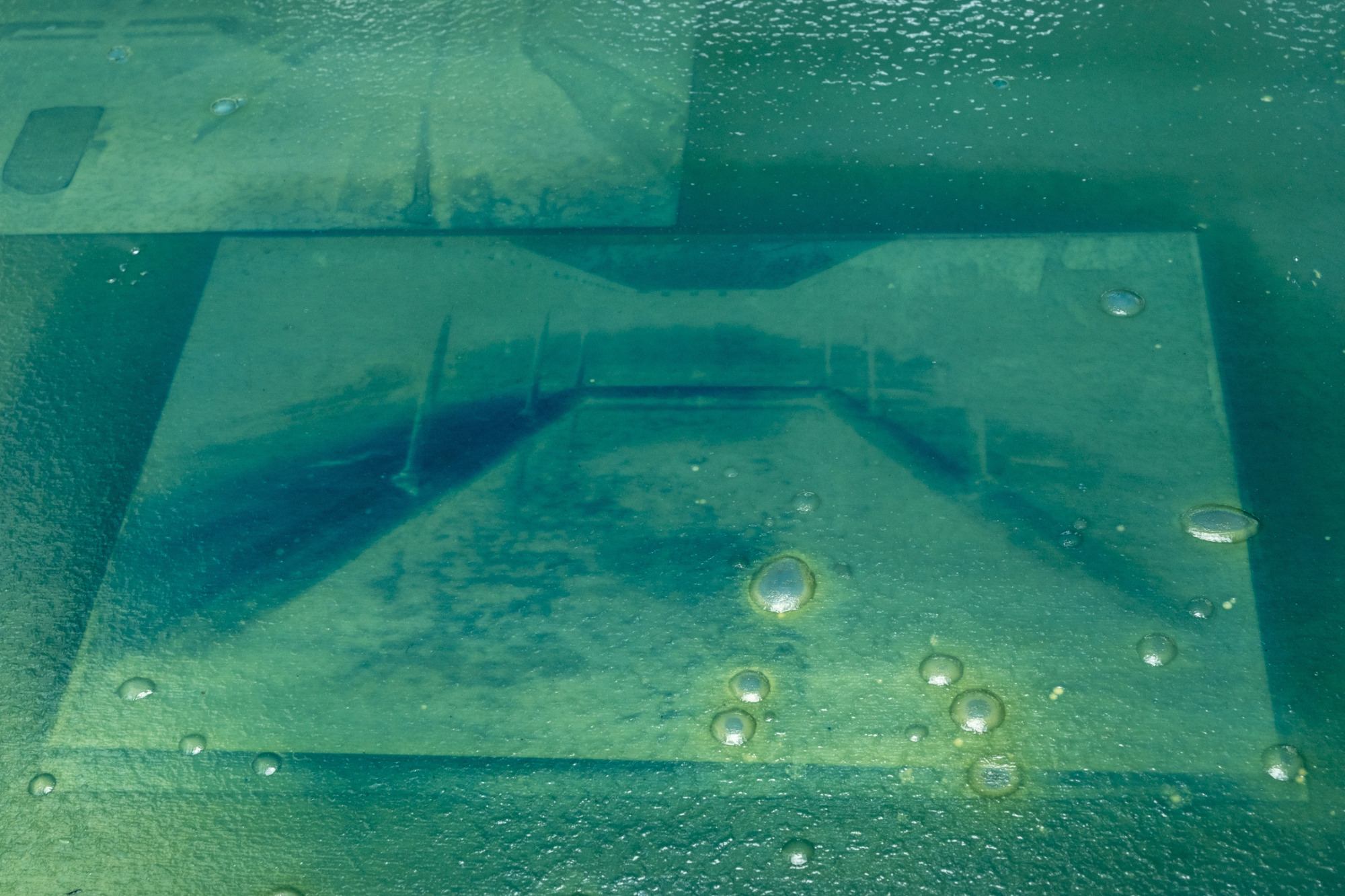
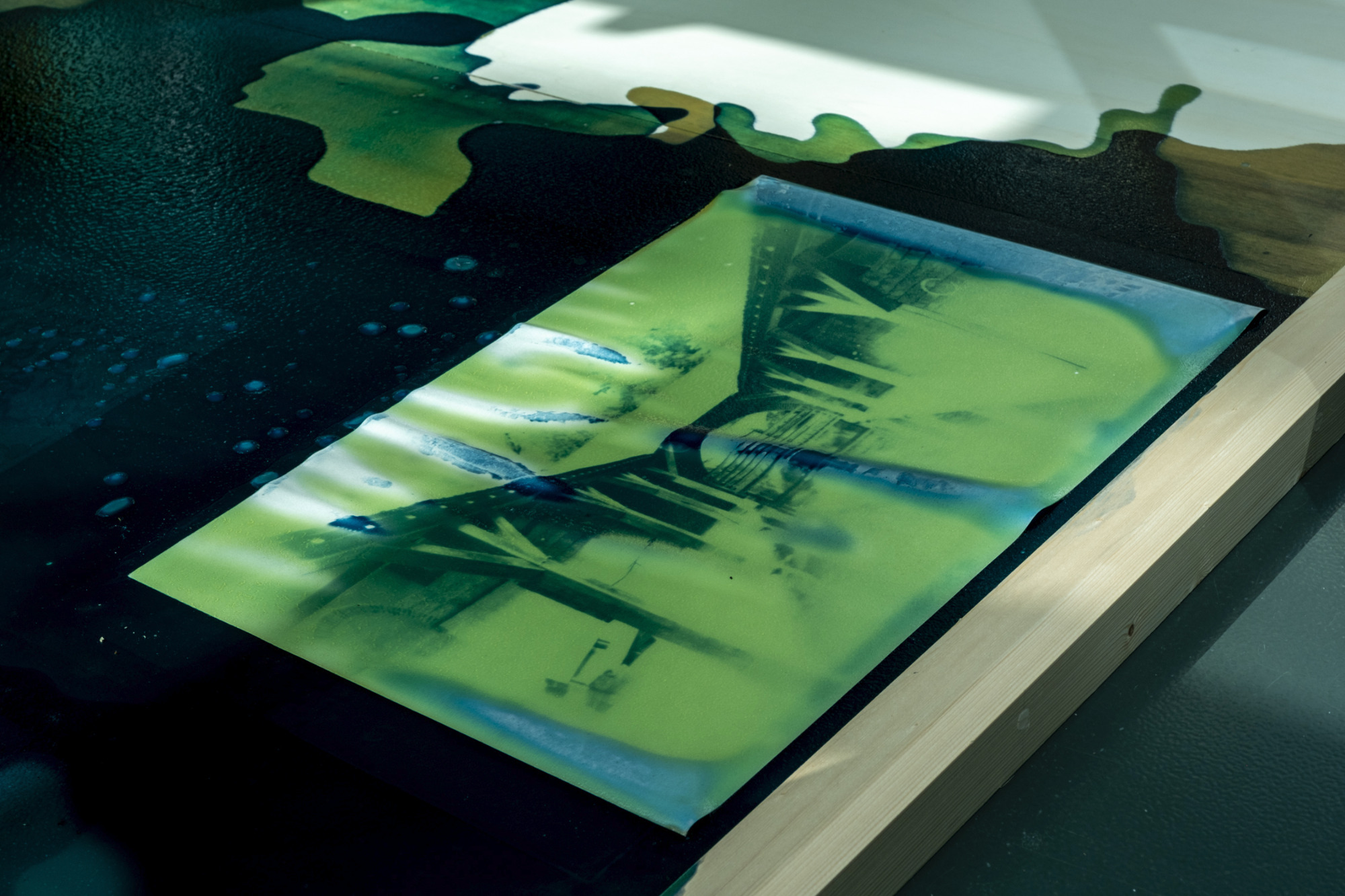
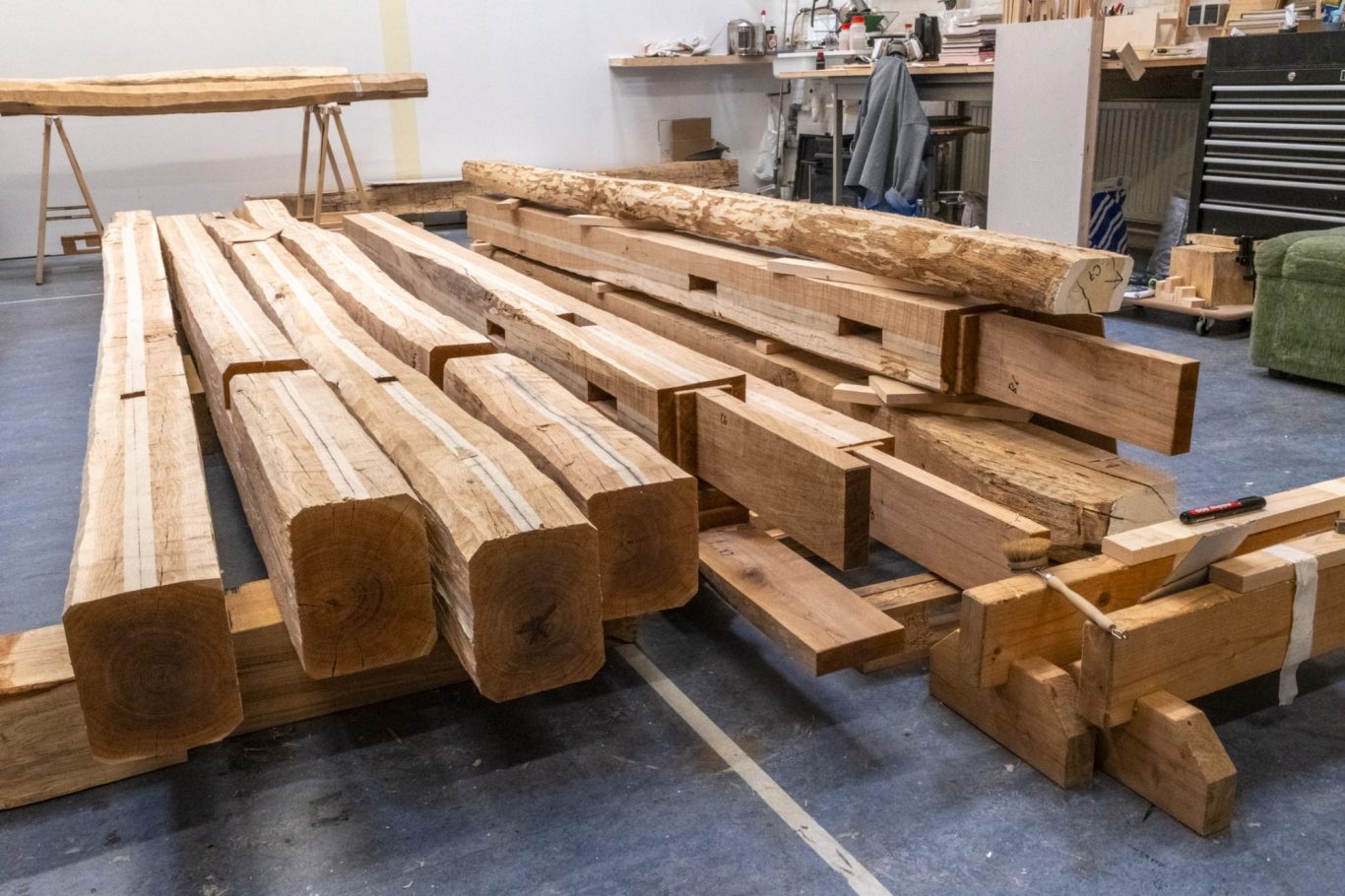
Materiality plays a key role in her work. For this installation, Koenen felled trees in France and then, together with others, hewed the timber using an axe — a to shape a rectangular beam. On the floor lies a light-sensitive gelatin, blue-green like the water of a basin. In this shifting surface, prints of photographs emerge that Koenen took of washhouses in the French region where she grew up. In doing so, she connects personal memories with her interest in the fragility of cultural heritage.
The installation, titled Afterimage, refers to the visual impression that remains on the retina after the original image has disappeared. Like the lavoirs themselves: places that have lost their function but continue to linger as echoes in the landscape.
The timber framework structure was produced in close collaboration with Thomas Hütten. Many thanks to everyone who contributed to the realization of this project.
photgraphs by Anne Jannes photography
Cyanotype gelatin
Making the light sensitive gelatin surface and exposing the photographs
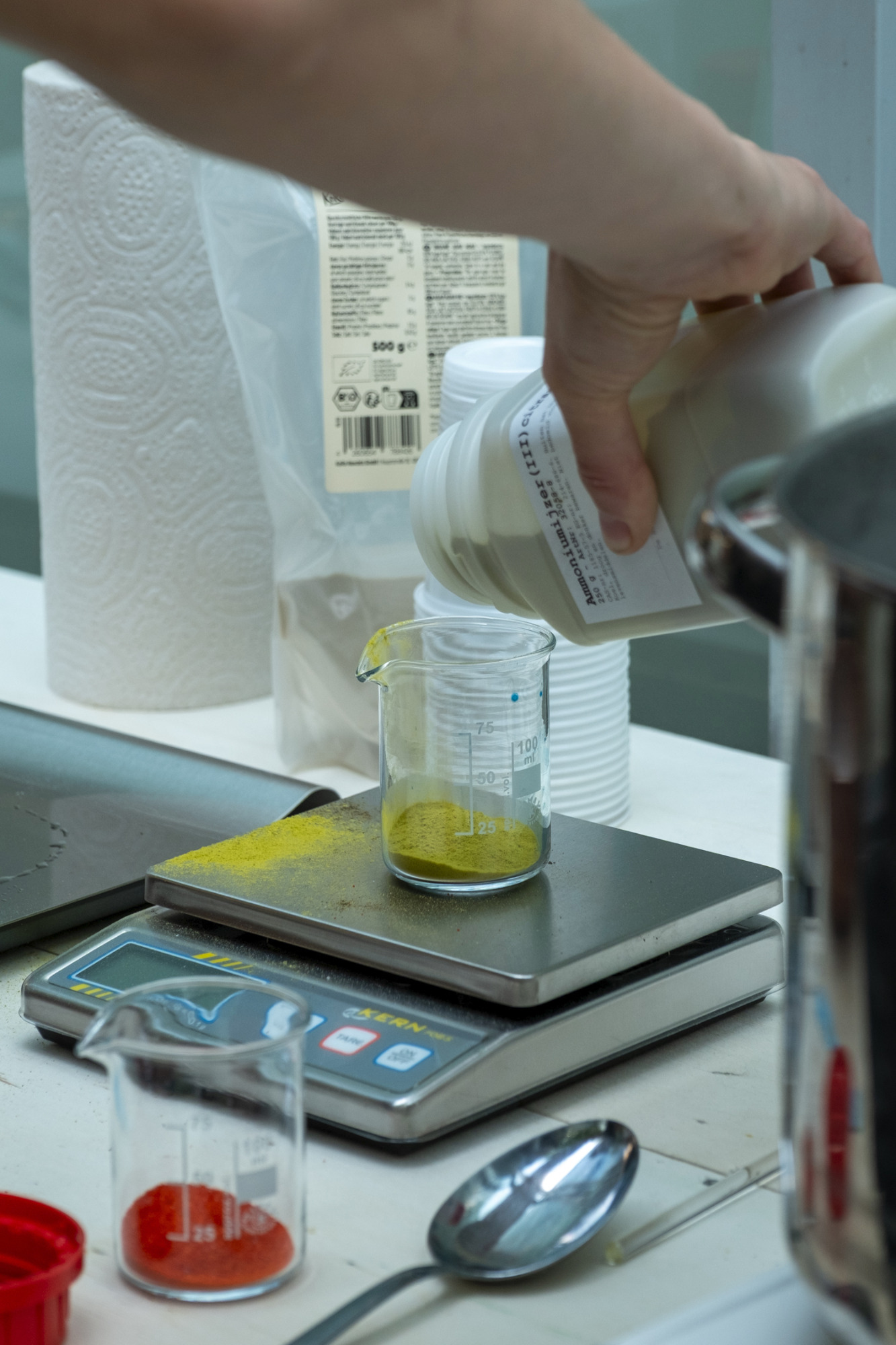
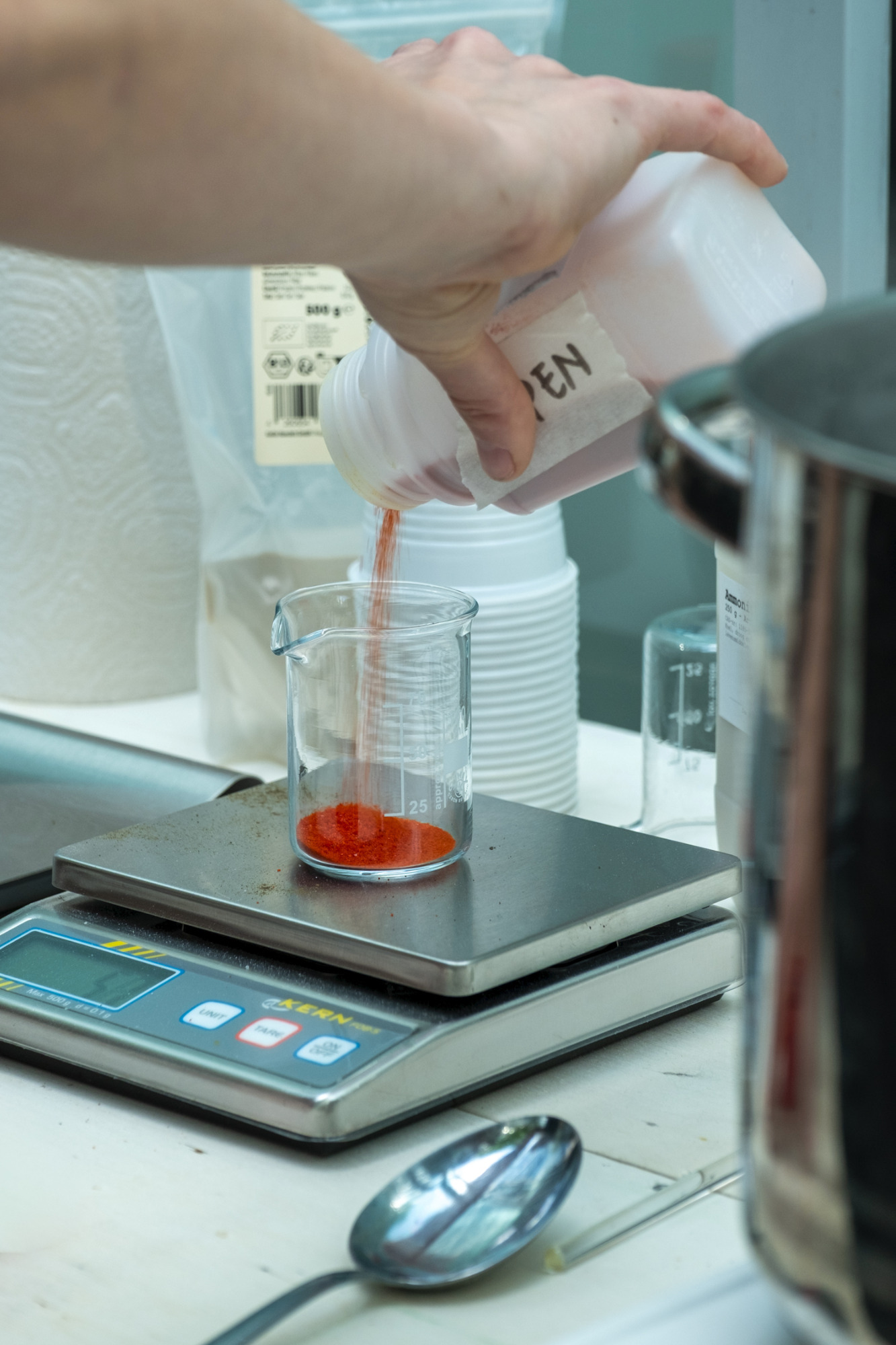
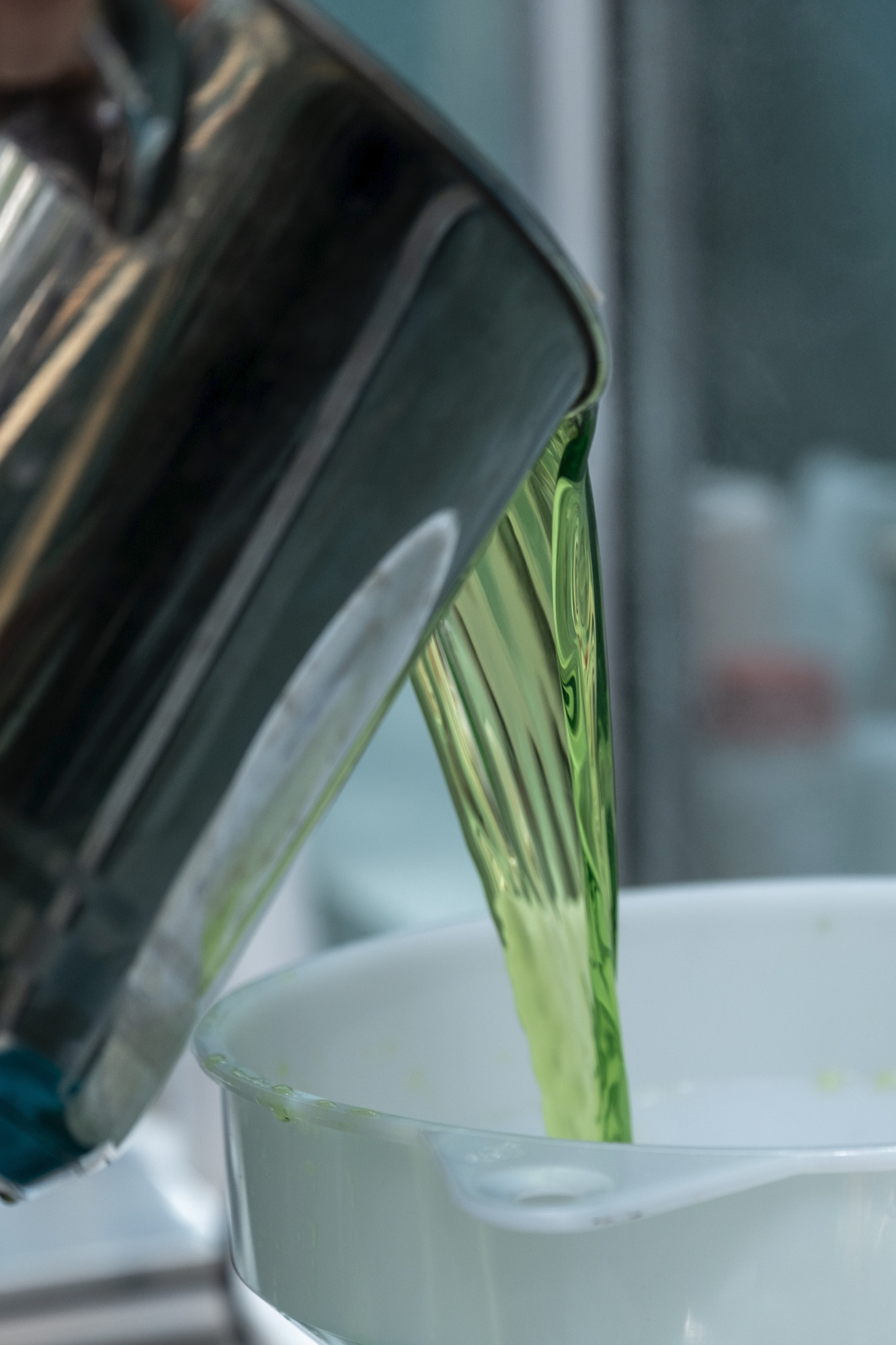
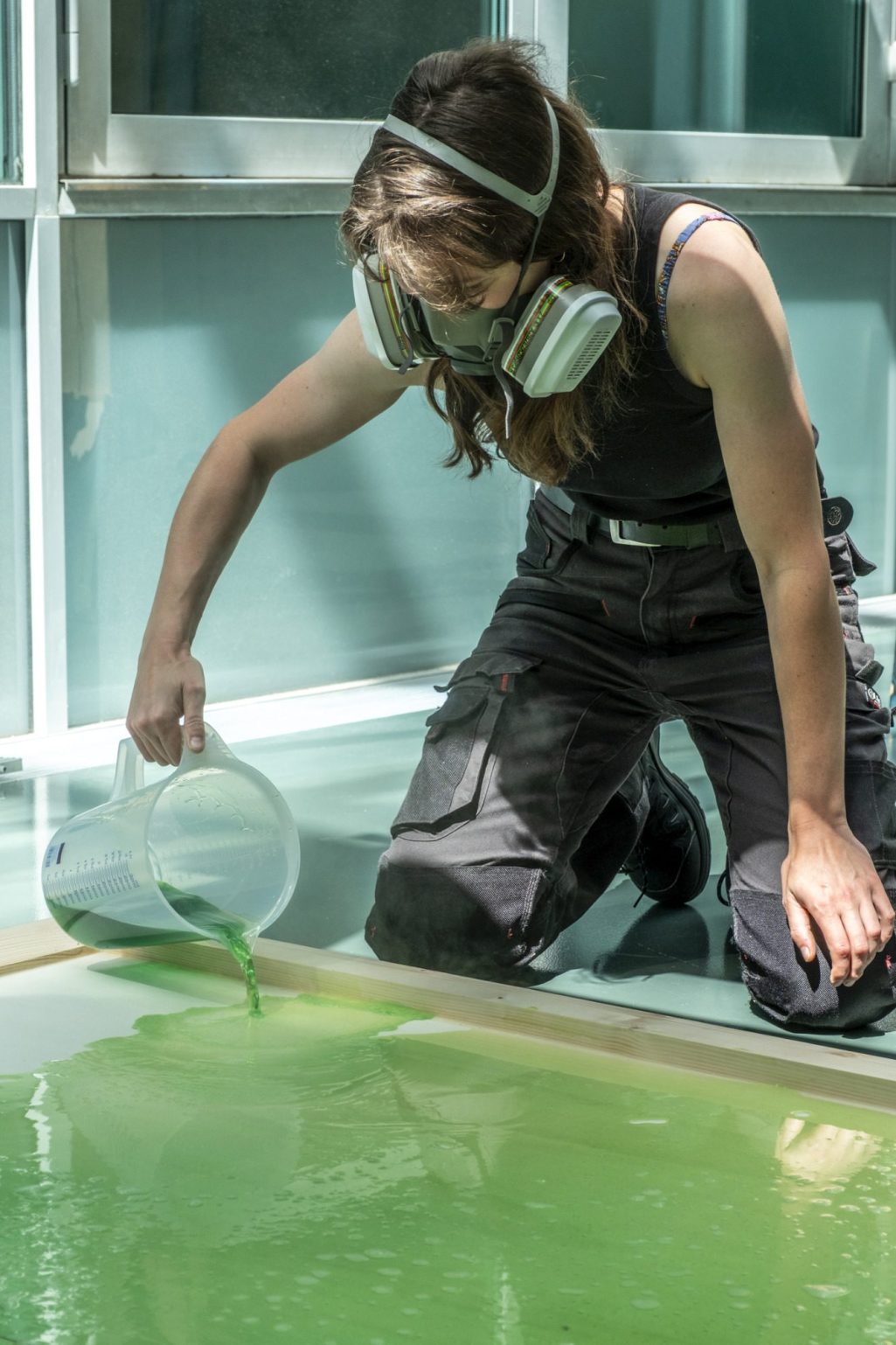
More about the process
All photographs on this page were taken by Michael Richardy, who closely followed the making process and documented key moments in the realization of this project
A LINE IN THE SAND
Assembling the frame
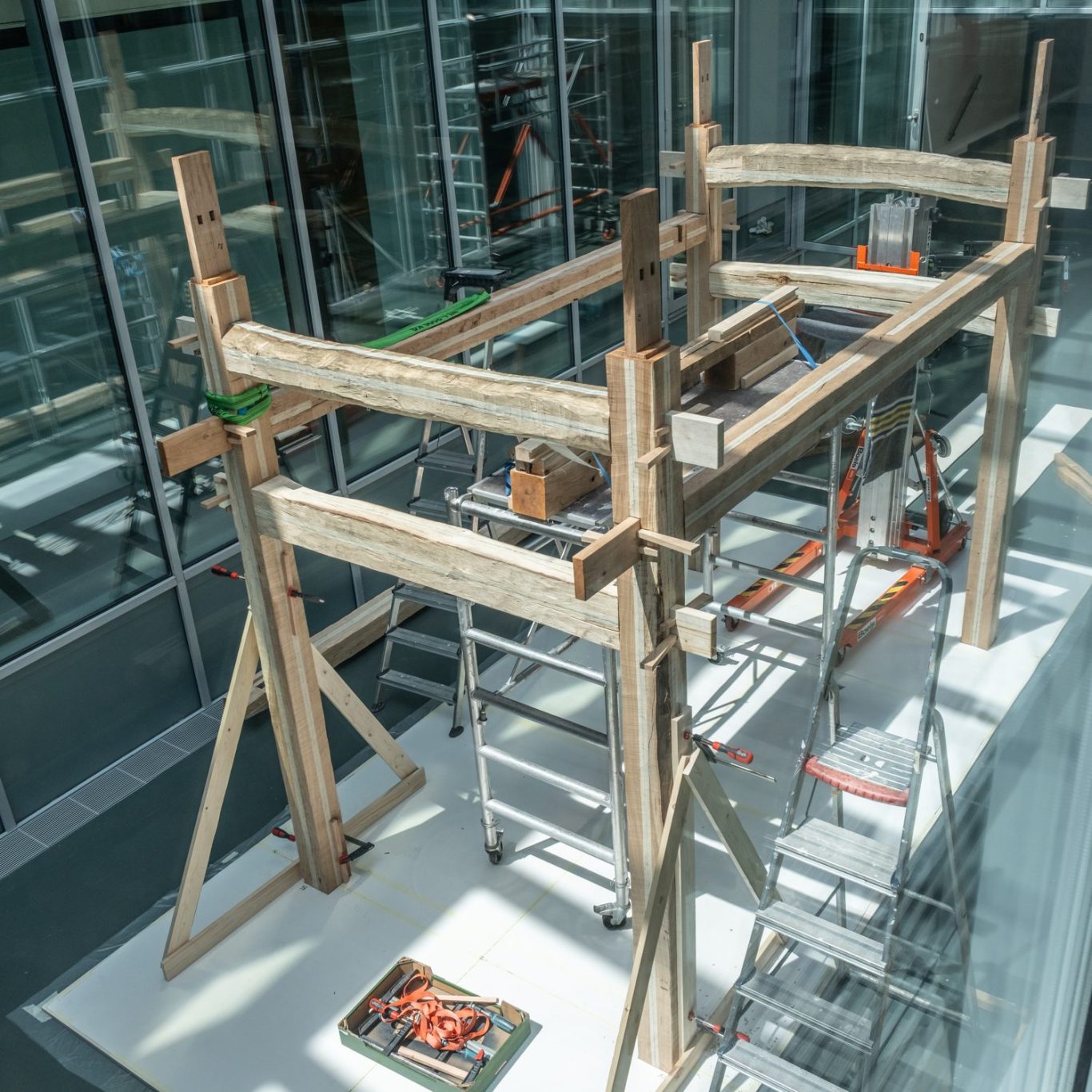
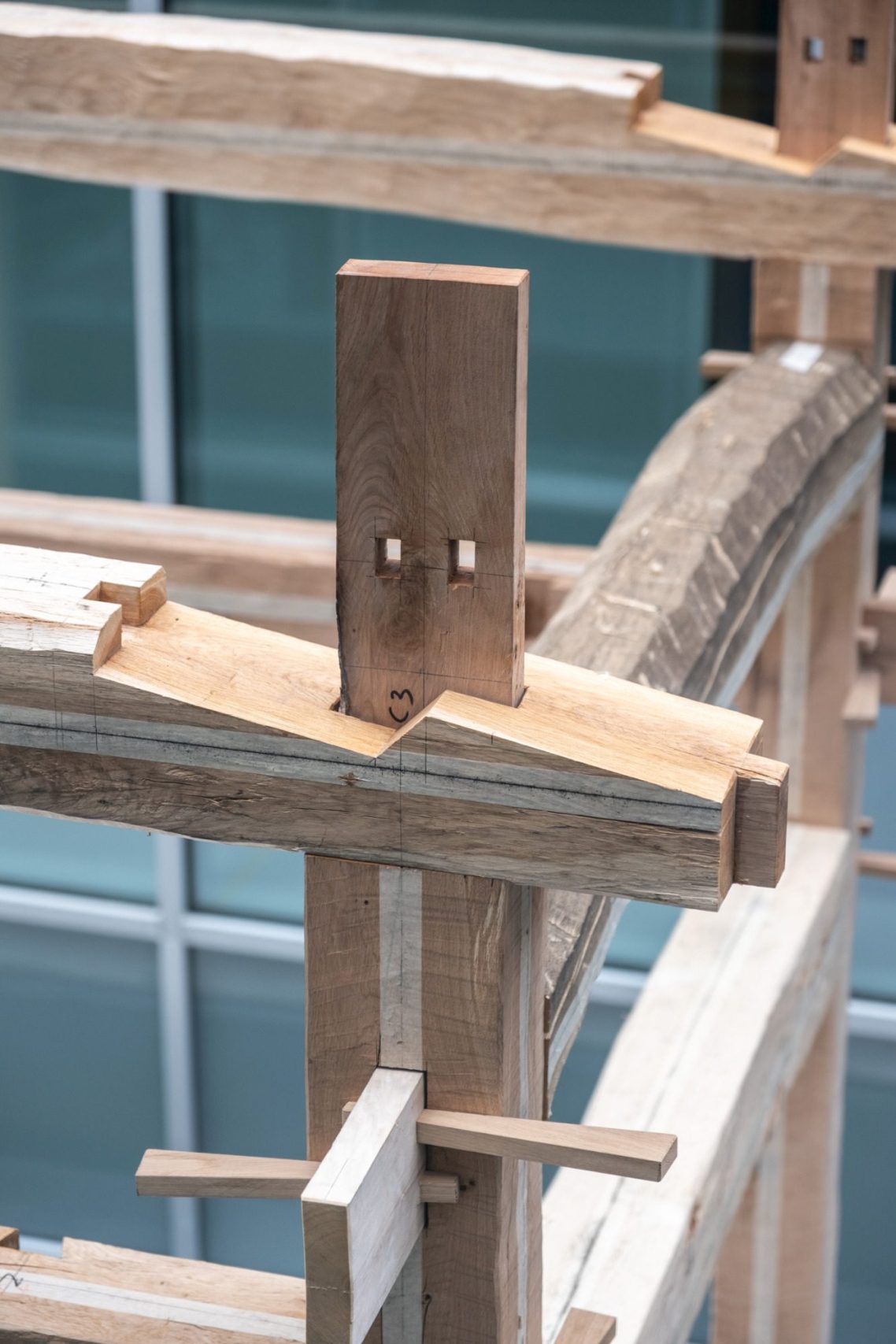
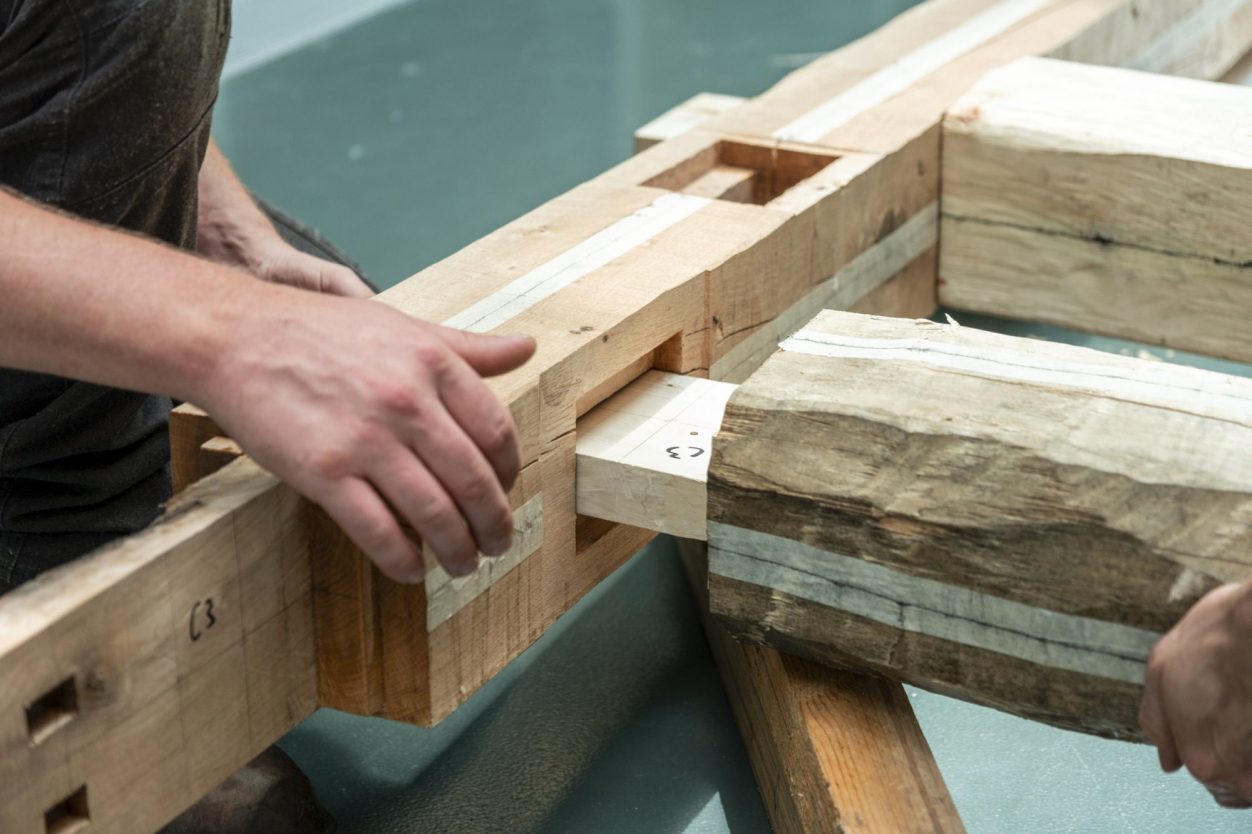
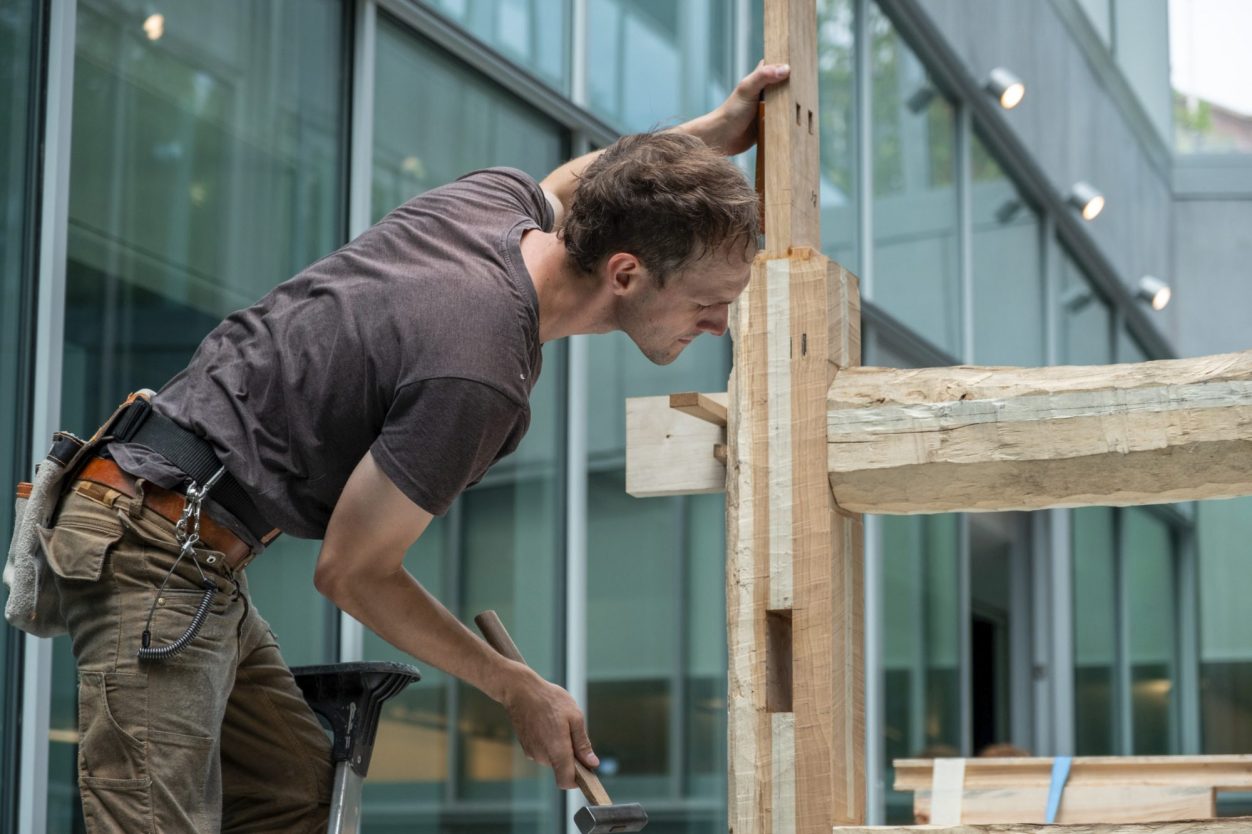
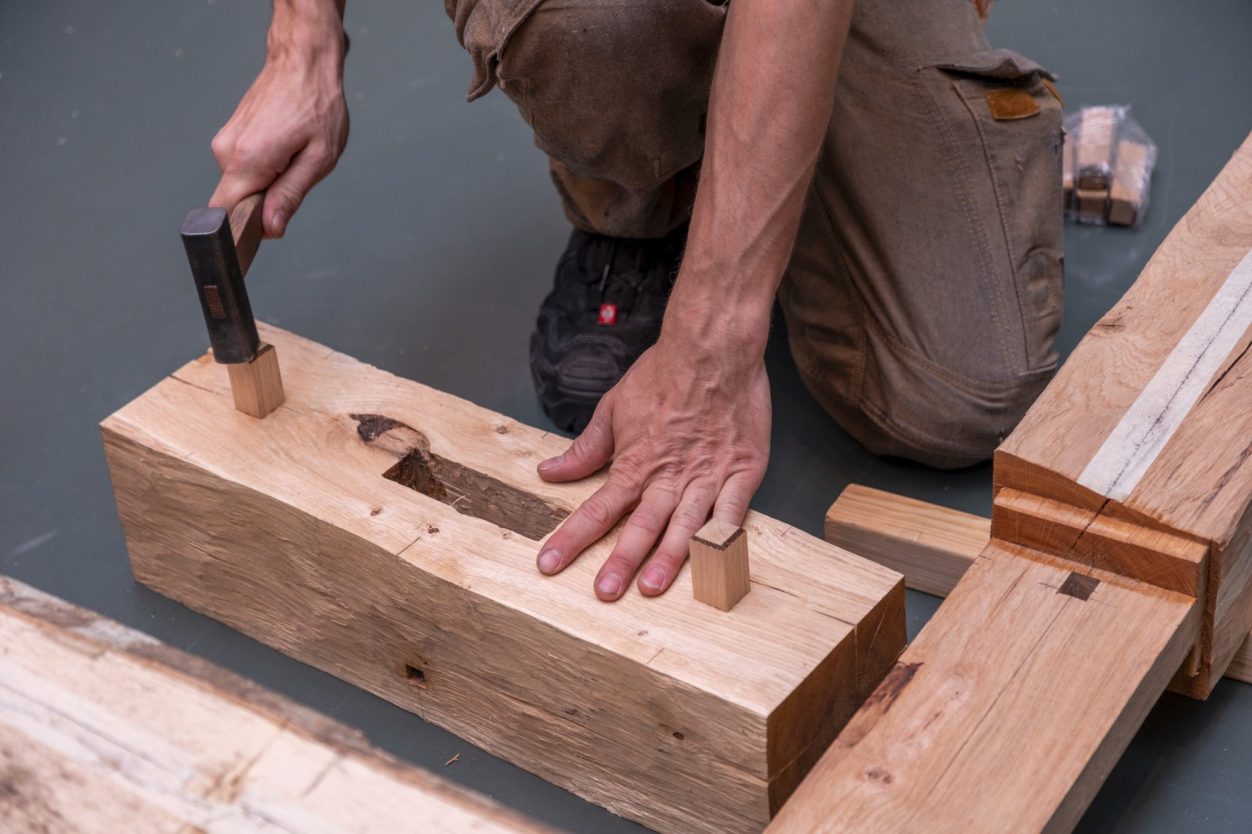
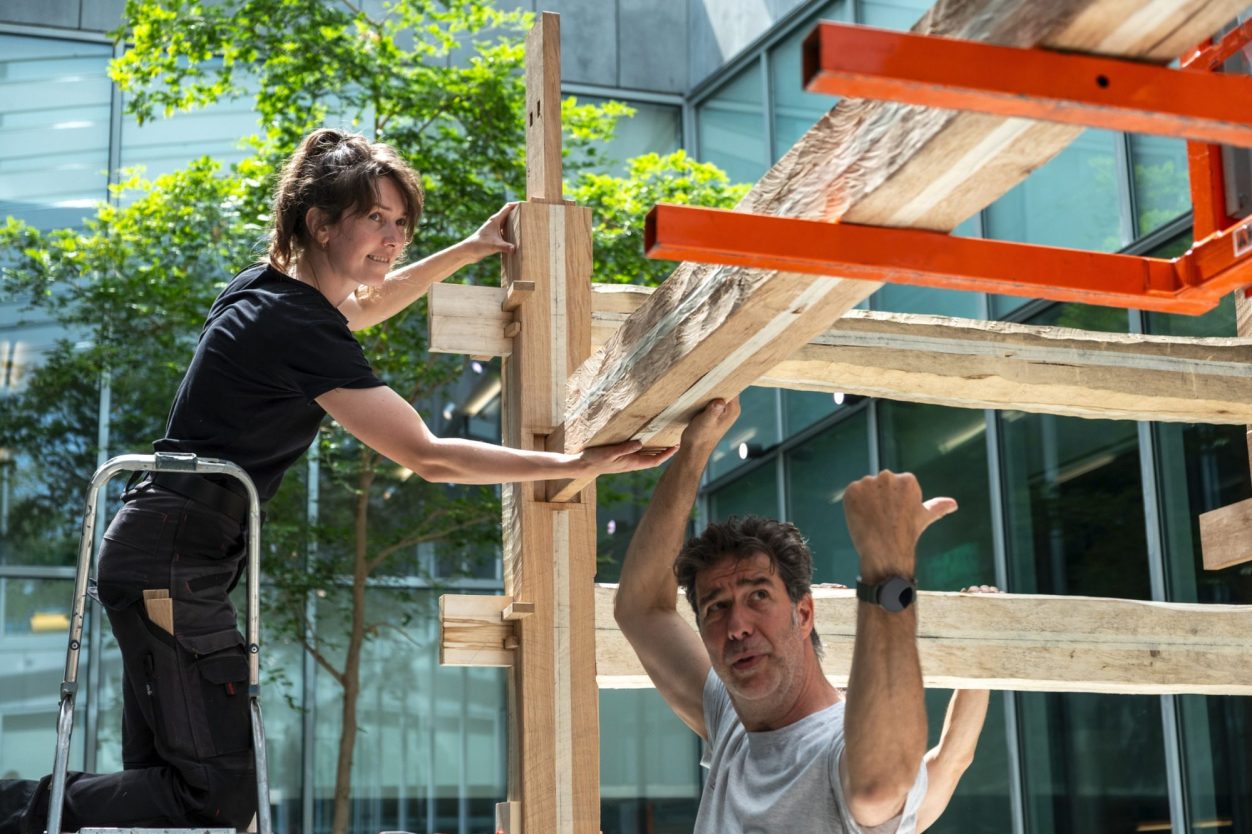
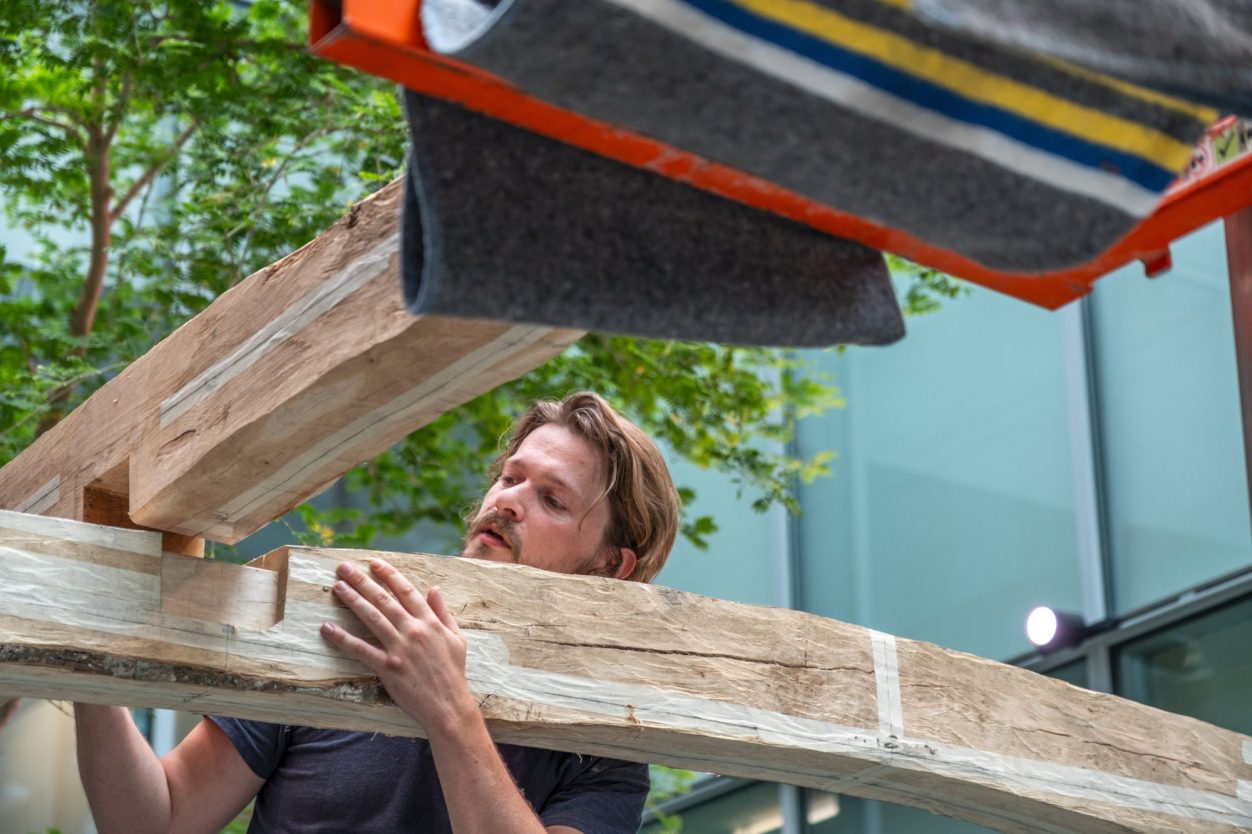
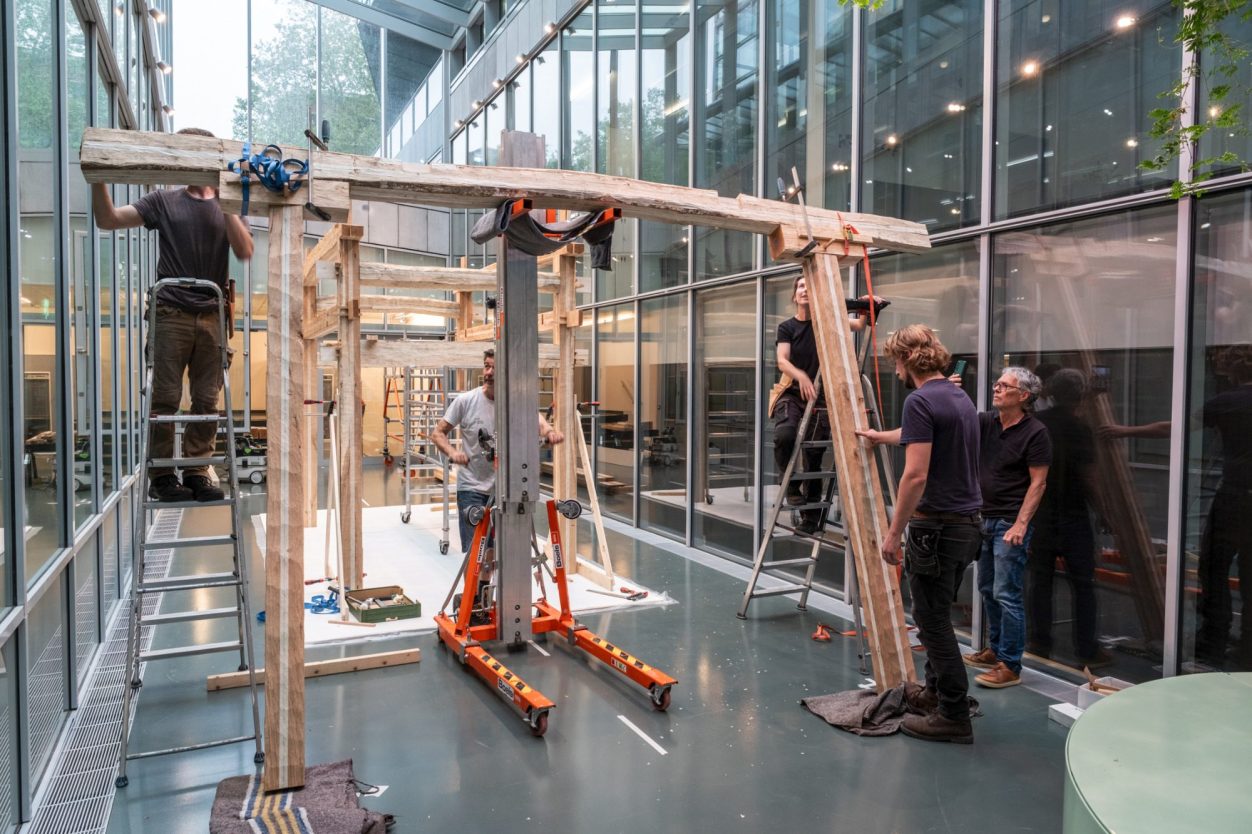
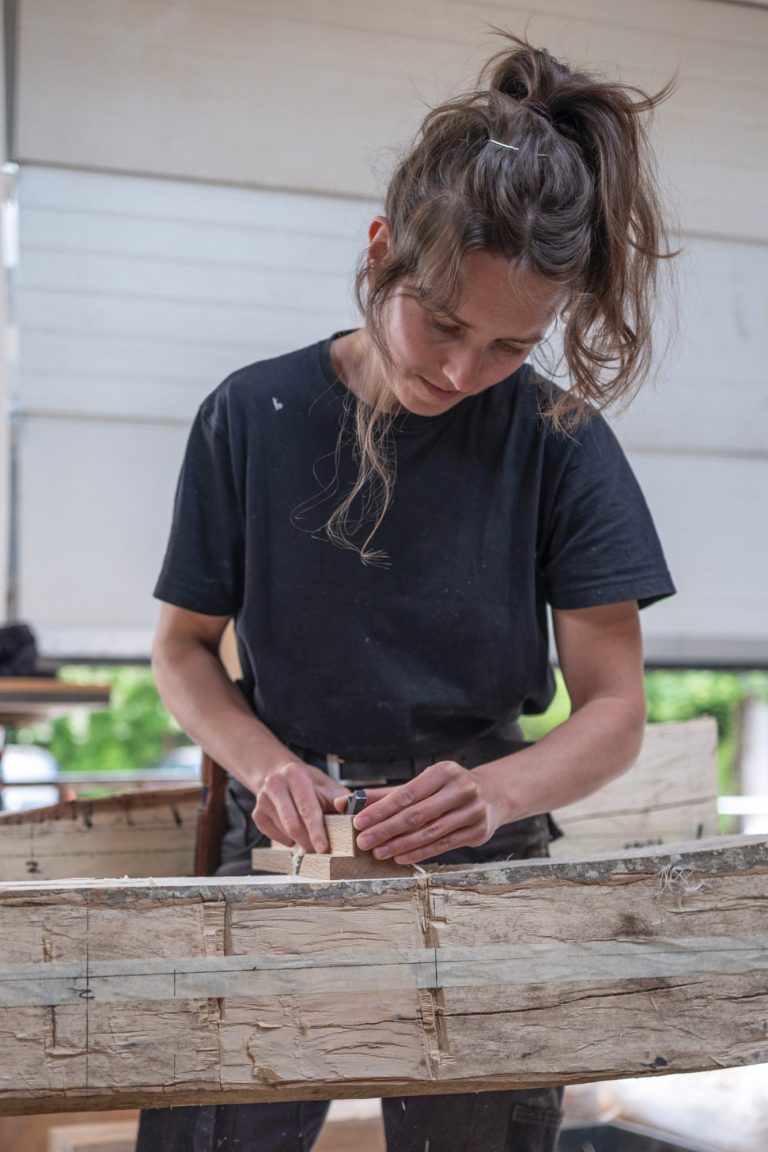
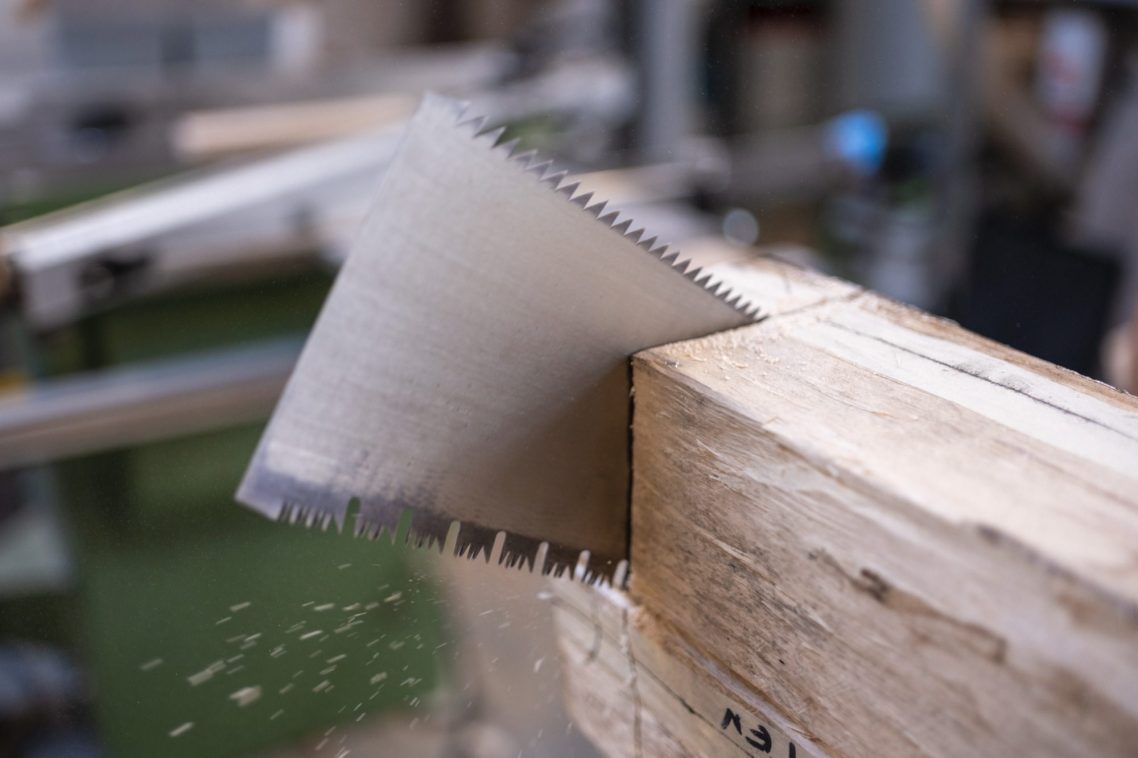
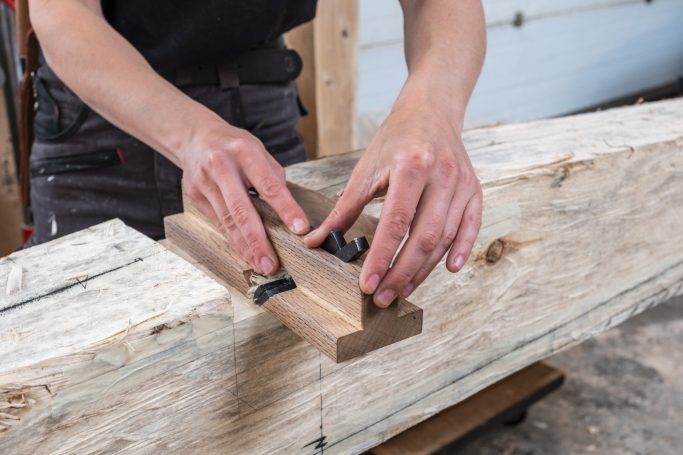
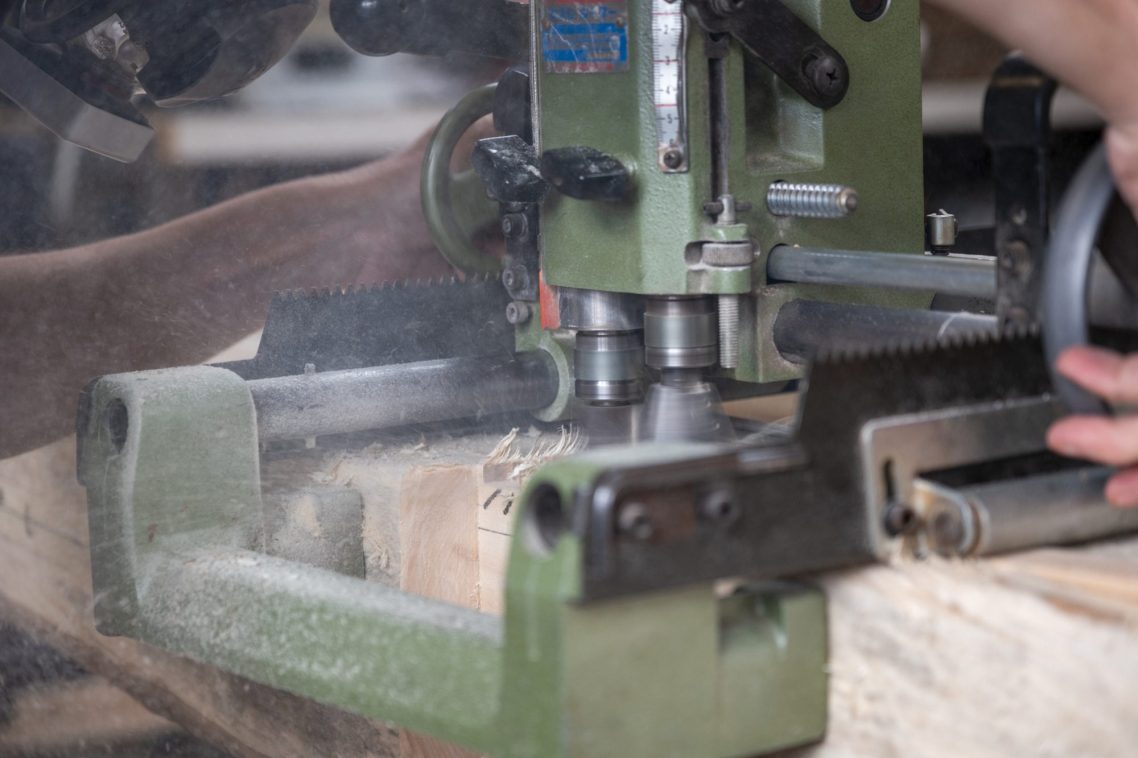
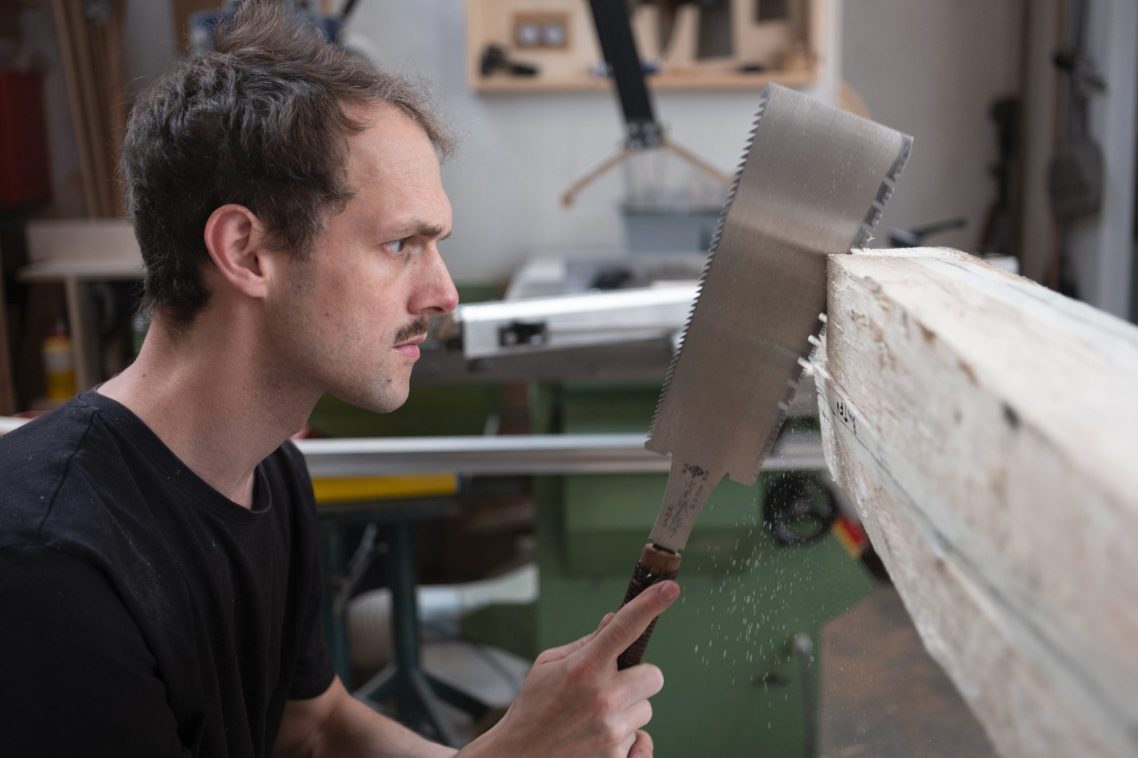
Making the joinery with Thomas Hütten (THMSH)
(supported by Mondriaan Fonds with the voucher artisan)
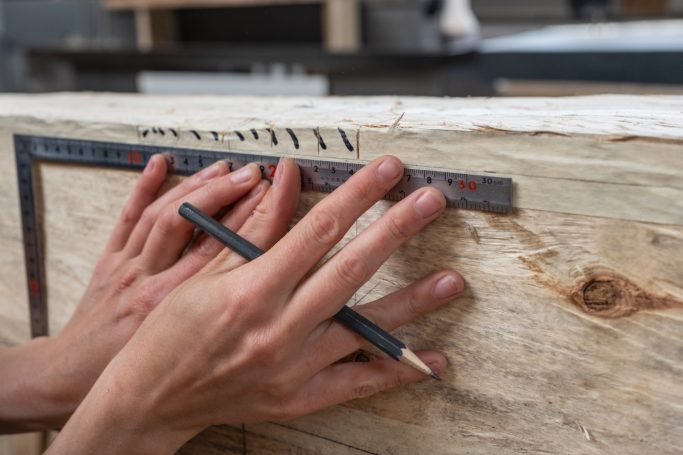
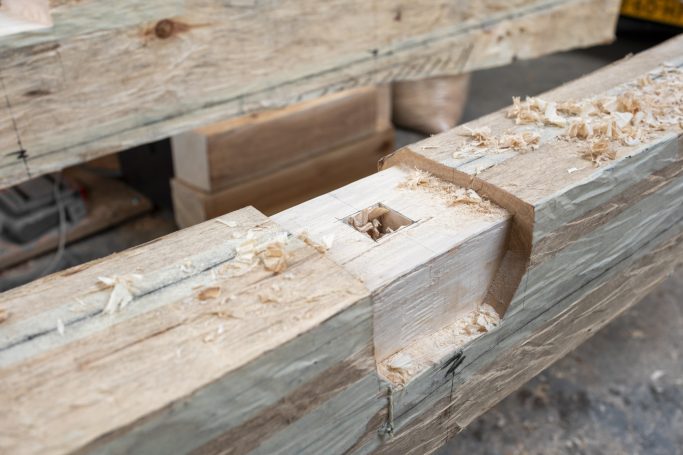
The joinery is cut through machine and hand tools. Various European and Japanese techniques were used. Because the wood is irregular (hewn) we used the center line to lay out the joinery.
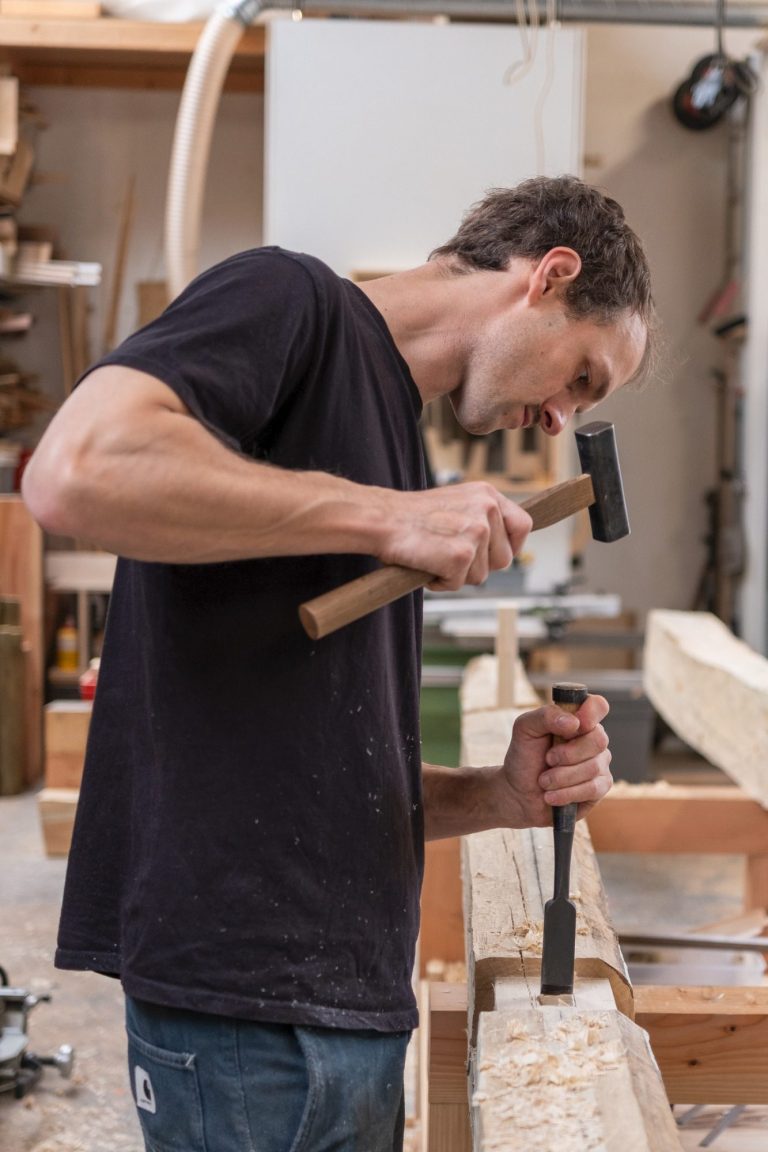
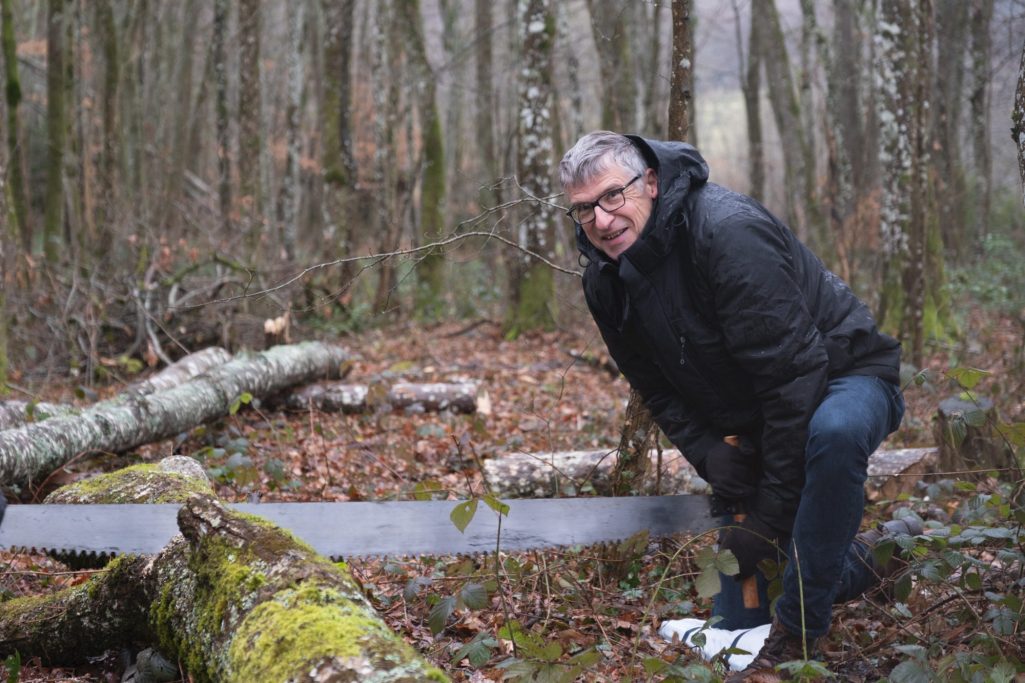
Hewing in France
A part of the trees used in this project were
harvested and hewn in France (January). Different species were used, such as poplar, oak, beech and cherry.